
The Great Front Tooth Debate

Teeth Crown vs Veneer: Which One Does Your Smile Actually Need?

Teeth crown vs veneer is one of the most common questions patients ask when they want to improve their smile — and the answer depends on one key thing: how much of your tooth is damaged.
Here's a quick comparison to help you decide:
| Veneer | Crown | |
|---|---|---|
| What it covers | Front surface only | Entire tooth |
| Thickness | ~1mm | ~2mm |
| Best for | Cosmetic flaws on healthy teeth | Damaged, cracked, or decayed teeth |
| Tooth removal | Minimal (~0.5mm enamel) | More extensive reshaping |
| Primary goal | Aesthetics | Restoration + protection |
In short: veneers are a cosmetic solution for structurally sound teeth, while crowns are a restorative solution for teeth that are damaged, weakened, or heavily decayed.
Both treatments can dramatically improve your smile — but choosing the wrong one can mean unnecessary tooth removal or inadequate protection. That's why understanding the difference matters.
The dentists at Advanced Smiles Marion hold fellowships in the International College of Dentists and the Academy of General Dentistry, placing them among the top 3% of dentists worldwide — and helping patients navigate the teeth crown vs veneer decision is a routine part of the personalized care they provide every day. If you're weighing your options, you're in the right place.
Understanding the Core Difference: Teeth Crown vs Veneer
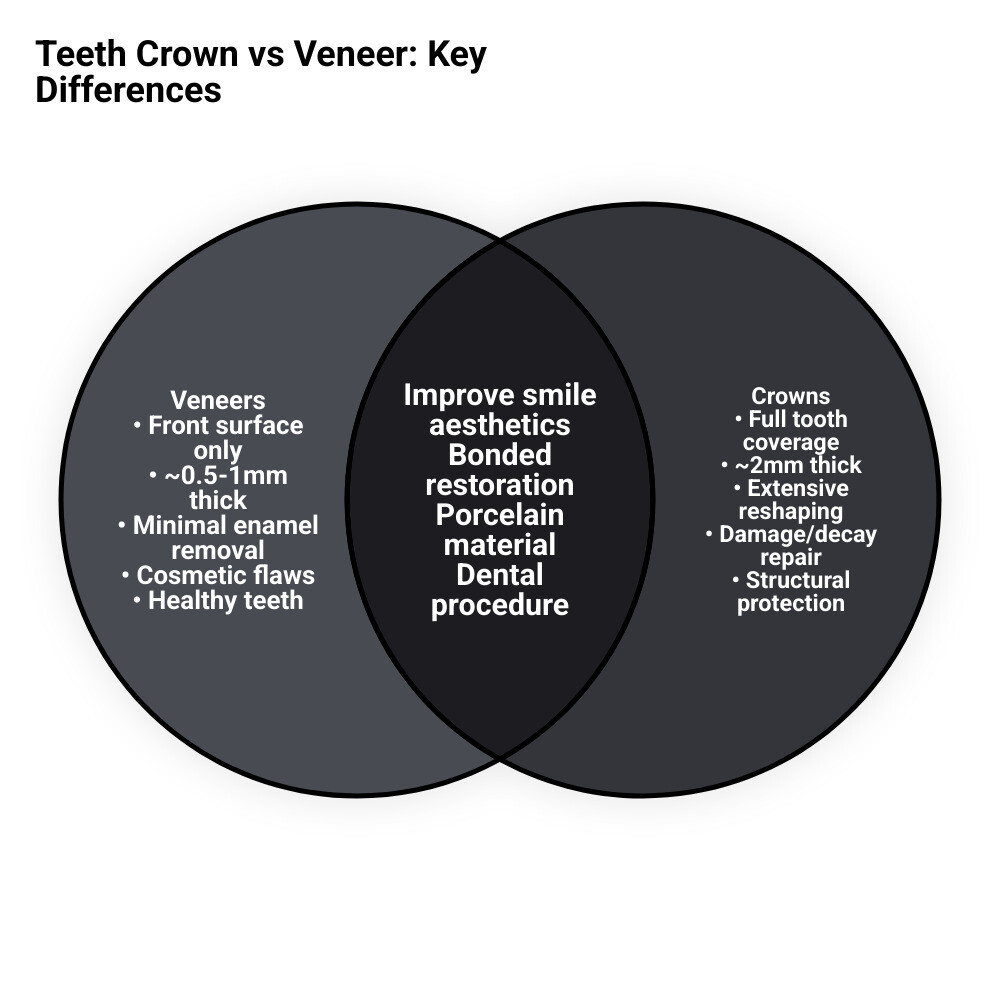
When we talk about a teeth crown vs veneer, we are looking at two different philosophies of dental care: cosmetic enhancement and structural restoration. While both can make your smile look like a million bucks, they go about it in very different ways.
A veneer is like a designer contact lens for your tooth. It is a thin shell, usually made of porcelain, that we bond specifically to the front-facing surface of the tooth. Because it only covers the part people see when you smile, it requires very little preparation of your natural tooth.
A dental crown, on the other hand, is more like a protective helmet. It encapsulates the entire visible portion of the tooth above the gum line. This provides 360-degree protection, which is vital if the tooth is cracked, heavily decayed, or has undergone a root canal.
| Feature | Porcelain Veneer | Dental Crown |
|---|---|---|
| Thickness | Approx. 0.5mm to 1mm | Approx. 2mm |
| Coverage | Front surface only | Entire tooth (full "cap") |
| Enamel Reduction | Minimal (0.5mm) | Extensive (up to 2mm) |
| Primary Purpose | Aesthetic/Cosmetic | Functional/Restorative |
As noted in the Difference Between Veneers and Crowns, the amount of natural tooth structure remaining is often the deciding factor. If you still have a sturdy, healthy tooth but don't like how it looks, a veneer is often the way to go. If the tooth is failing, a crown is the hero you need. You can find More info about dental crowns to see how they help preserve your oral health.
Structural Support vs. Aesthetic Enhancement
The debate between teeth crown vs veneer often comes down to biting force and tooth integrity. Veneers are incredibly strong once bonded to enamel, but they aren't designed to hold a broken tooth together. They excel on front teeth and bicuspids where the goal is to mask stains, close gaps, or fix minor chips.
Crowns are the heavy lifters. If you have a tooth that is at risk of fracturing under the pressure of chewing, a crown provides the necessary "hug" to keep the tooth intact. According to Veneers vs. Crowns, crowns are often the better choice for back teeth (molars) because of the intense grinding forces they endure. At Advanced Smiles Marion, we provide Expert insights on veneers vs crowns to ensure you choose the option that matches your lifestyle and dental history.
Material Options for Restorations
We live in an era of incredible dental technology, and the materials we use for both veneers and crowns have never been more lifelike.
- Porcelain: The gold standard for aesthetics. It mimics the light-reflecting properties of natural enamel and is highly stain-resistant.
- Composite Resin: A more budget-friendly option for veneers that can often be applied in a single visit, though it may not last as long as porcelain.
- Zirconia: Known for its "indestructible" nature, this is a popular choice for crowns on back teeth where strength is the priority.
- Porcelain-Fused-to-Metal (PFM): A classic crown choice that offers a balance of strength and aesthetics.
- Pressed Ceramic: Often used for both crowns and veneers to provide a durable, beautiful finish.
For a deeper dive into these options, check out our Dental crown materials guide.
When to Choose Veneers for Your Smile
If your teeth are healthy but you find yourself hiding your smile in photos, veneers might be your best friend. They are the go-to solution for what we call "cosmetic flaws." This includes teeth that are permanently stained (perhaps from childhood tetracycline use), minor chips that haven't compromised the tooth's structure, or a "diastema"—the fancy dental word for a gap between your teeth.
Veneers are also a fantastic solution for "orthodontic relapse." If you wore braces years ago but your teeth have shifted slightly, veneers can often "straighten" your smile without the need for another round of metal brackets. You can explore our Dental veneers guide to see if you are a candidate.
Ideal Candidates for a Teeth Crown vs Veneer
To be a good candidate for veneers, you need a healthy amount of enamel. Since the veneer bonds directly to the enamel, we can't place them on teeth that are mostly made of filling material or have significant decay.
We also look closely at your gum health. Healthy gums provide the perfect frame for a new smile. If you have a habit of grinding your teeth (bruxism), we might suggest a crown or a custom nightguard to protect your investment. Scientific research on veneer success shows that when placed on healthy teeth with proper technique, veneers have an incredibly high success rate. We also help patients weigh the Cost of dental bonding vs veneers to find the right balance between longevity and budget.
The Benefits of Minimal Preparation
One of the things we love most about veneers is that they represent "conservative dentistry." Our goal is always to keep as much of your natural tooth as possible. Preparing a tooth for a veneer usually only involves removing about 0.5mm of enamel—roughly the thickness of a fingernail.
We use conservative depth-cutting techniques to ensure we don't go deeper than necessary. Furthermore, we work closely with expert lab technicians who specialize in shade matching and tinting. This ensures your veneers don't just look "white," but look like your teeth, only better. While the process is generally considered irreversible because of the enamel removal, it is far less invasive than a crown. You can read more about Improving your smile with dental veneers in the Journal of the American Dental Association.
The Restorative Power of Dental Crowns
Sometimes, a tooth needs more than a facelift; it needs a rebuild. This is where the dental crown shines. If a tooth has been ravaged by severe decay, has a large filling that is starting to crack, or has become brittle following a root canal, a crown is necessary to keep the tooth from literally falling apart.
A crown restores the tooth to its original size and shape, allowing you to chew with confidence again. If you are looking for Where to get affordable dental crowns, our team in Marion, OH, focuses on high-quality restorations that won't break the bank.
Comparing Longevity: Teeth Crown vs Veneer
When comparing teeth crown vs veneer longevity, crowns generally have the edge. Because they are thicker and cover the entire tooth, they are highly resistant to fractures.
- Veneers: Typically last 10–15 years.
- Crowns: Typically last 15–20 years (or longer with excellent care).
Of course, these numbers depend heavily on how you treat them. If you use your teeth as tools to open packages or bite your nails, even the best crown or veneer will fail prematurely. Regular maintenance and wearing a nightguard if you grind your teeth are essential. Research on ceramic crown margins highlights that a well-fitted crown is less likely to develop decay at the edges. For more help, see our Dental crown care tips.
Functional Restoration for Back Teeth
While we often think of "smiles" as just the front teeth, your back teeth do the hard work of grinding up your food. Molars face immense pressure—up to 200 pounds of force! Because of this, veneers are almost never used on molars.
Crowns provide the structural reinforcement needed for these high-pressure zones. They protect the tooth from "flexing" under pressure, which can cause cracks to spread. Whether you need an all-ceramic crown for a visible bicuspid or a durable zirconia crown for a back molar, understanding The 2 types of dental crowns (aesthetic vs. functional) is key to a long-lasting result.
Procedure, Costs, and Maintenance
The journey to a new smile is surprisingly similar for both treatments. It usually begins with a consultation where we discuss your goals and take digital impressions. No more goopy, gag-inducing trays! We use cutting-edge scanning technology to create a 3D map of your mouth.
Next, we prepare the tooth. For a veneer, this is a light buffing; for a crown, it involves reshaping the tooth so the "cap" can fit over it. You'll usually wear a temporary restoration for about two weeks while our lab custom-crafts your permanent one. Once it arrives, we check the fit, the bite, and the color before bonding it permanently in place.
You can find more details on the Average cost for dental veneers and the Price of dental cap through our resource center.
Investment and Insurance Coverage
One major difference in the teeth crown vs veneer debate is how insurance companies view them.
- Crowns: Because they are often "medically necessary" to save a damaged tooth, many insurance plans cover a portion of the cost (often around 50%).
- Veneers: These are almost always classified as "cosmetic elective" procedures, meaning insurance rarely covers them.
At Advanced Smiles Marion, we believe everyone deserves a healthy smile regardless of insurance. That’s why we offer a Dental Wellness Plan for individuals and families without insurance. This plan provides discounted rates on treatments and even includes two fluoride treatments a year to keep your natural teeth (and your new restorations) healthy. We also offer payment plans to help fit your smile makeover into your monthly budget. You might wonder Why veneers cost more than crowns—it often comes down to the meticulous lab work required to make a thin shell look perfectly natural.
Long-Term Care and Risks
Neither crowns nor veneers are "set it and forget it." They require the same care as your natural teeth. The biggest risk is plaque buildup at the gum line. While the porcelain itself can't decay, the tooth underneath it still can!
To keep your restorations in tip-top shape:
- Brush twice daily: Use a non-abrasive fluoride toothpaste to avoid scratching the porcelain.
- Floss daily: This is critical for preventing decay at the margins (where the restoration meets the tooth).
- Regular Checkups: We need to monitor the "seal" of your crown or veneer to ensure no bacteria are sneaking underneath.
Frequently Asked Questions about Teeth Crown vs Veneer
Can veneers be used on back teeth?
Generally, no. Veneers are designed for the "aesthetic zone"—the teeth that show when you smile. Bicuspids can sometimes receive veneers, but molars require the full-coverage strength of a crown to handle chewing forces.
Are crowns or veneers better for front teeth?
It depends on the damage. If the tooth is mostly intact and the issues are cosmetic (stains, small gaps, minor chips), veneers are superior because they preserve more enamel. However, if the front tooth is broken or has a large existing filling, a crown is the better choice for longevity and strength.
What questions should I ask my dentist?
When you visit us in Marion, OH, ask:
- Do you use conservative depth-cutting techniques for veneers?
- Can I see before-and-after photos of similar cases?
- What material do you recommend for my specific bite?
- Are there lab technicians involved in the shade-matching process?
Conclusion
The choice between a teeth crown vs veneer doesn't have to be a stressful one. At Advanced Smiles Marion, our highly educated dentists take the time to listen to your goals and assess your dental health to create a personalized plan. Whether you are looking for a total smile makeover with veneers or need to save a failing tooth with a high-tech crown, we are here to help.
Beyond restorations, we are proud to offer advanced laser treatments for TMJ pain, canker sore healing, and periodontal disease. And if you ever find yourself in a "tooth-mergency," we offer emergency dental treatments and can usually see you the same day.
Ready to end the debate and start your journey to a better smile? Schedule a consultation for dental crowns or veneers today and let us show you what world-class, affordable dental care looks like right here in Marion.
Get in touch
Have any questions? Want to learn more?


