
Crown Jewels: A Deep Dive into Dental Crown Materials and Their Uses


Understanding Your Options for Tooth Restoration
Dental crown materials determine how well your restoration will look, how long it will last, and how much it will cost. When a tooth is damaged, decayed, or weakened, a dental crown—essentially a tooth-shaped cap—covers and protects what remains while restoring its function and appearance.
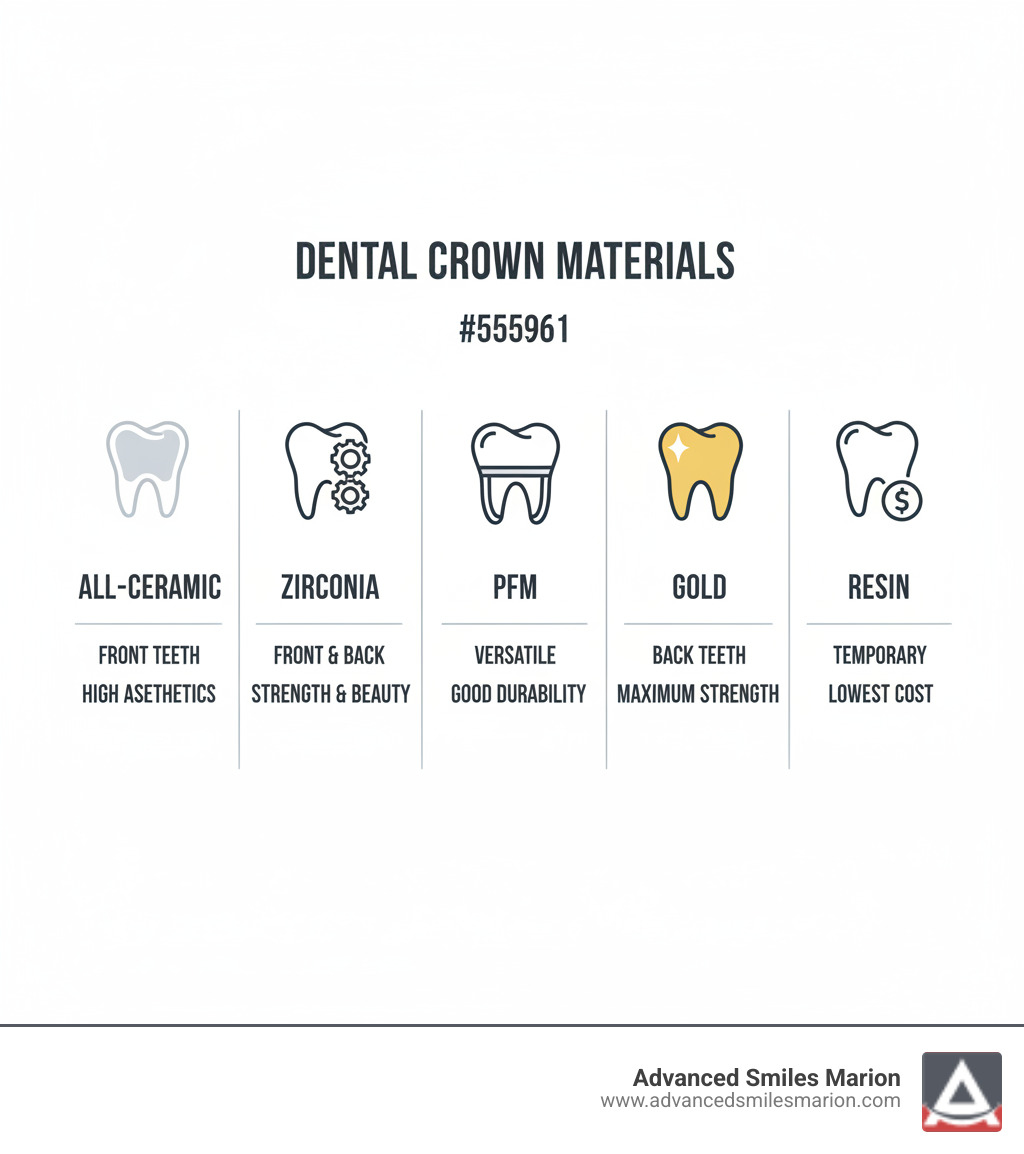
The five main types of dental crown materials are:
- All-Ceramic (Porcelain/E-max) - Best for front teeth, natural appearance, metal-free
- Zirconia - Strong and tooth-colored, works for front and back teeth
- Porcelain-Fused-to-Metal (PFM) - Combines strength with aesthetics, versatile placement
- Metal Alloys (Gold) - Most durable, ideal for back molars, unnatural color
- Composite Resin - Most affordable, often temporary, prone to wear
The material you choose affects three critical factors: aesthetics (how natural it looks), durability (how long it lasts), and function (how well it withstands daily use). Front teeth typically need materials that blend seamlessly with your smile, while back teeth require materials that can handle heavy chewing forces.
At Advanced Smiles Marion, our experienced dentists stay at the forefront of restorative dentistry through continuing education and professional involvement. Our team has extensive experience helping families select the right dental crown materials for their unique needs, balancing appearance, longevity, and budget considerations.
Why You Might Need a Dental Crown
Your teeth are remarkably strong, but they aren't indestructible. Sometimes, they need extra protection to keep serving you well—and that's where dental crowns come in.
Think of a crown as a protective helmet for a vulnerable tooth. It covers the entire visible portion, restoring its shape, strength, and appearance. While the dental crown materials you choose matter greatly, understanding why you might need a crown is the first step.
- Covering a damaged or severely decayed tooth: When a cavity is too large for a simple filling, a crown covers the entire tooth to prevent further decay and provide a durable new surface.
- Restoring a broken or worn-down tooth: Crowns can bring a tooth that is broken, chipped, or worn down from grinding back to its original form and function.
- Protecting a weak tooth from fracturing: A crown acts as a protective shell for a fragile tooth, holding it together and preventing it from breaking when you bite or chew.
- After root canal treatment: A root canal can leave a tooth brittle. A crown is almost always recommended afterward to protect it, especially for back teeth that handle heavy chewing forces.
- Supporting other restorations: Crowns are essential for holding a dental bridge in place and serve as the visible, functional part of a dental implant.
- Improving your smile's appearance: For cosmetic purposes, crowns can create a uniform, beautiful smile by covering severely discolored, misshapen, or poorly aligned teeth.
At Advanced Smiles Marion, we take the time to explain exactly why we're recommending a crown and what to expect. Our dentists stay current with the latest techniques and materials through ongoing education, ensuring you receive the most effective treatment. More info about our dental crowns can help you understand your options.
A Comprehensive Guide to Dental Crown Materials
Choosing the right dental crown materials is a crucial decision that balances strength, aesthetics, and longevity. Modern dentistry offers an array of high-quality materials, each with unique properties. Our goal is to match the perfect material to your specific situation, ensuring a restoration that looks natural and performs flawlessly.
To help you understand the options, here's a detailed comparison of the most common types of dental crown materials:
| Material Type | Durability | Aesthetics | Best Location | Average Lifespan (with proper care) |
|---|---|---|---|---|
| All-Ceramic (Porcelain & E-max) | Good, but can chip or fracture under heavy force | Excellent, highly natural translucency, matches natural teeth perfectly | Front Teeth (highly visible) | 10-15 years |
| Zirconia | Excellent, very strong and resistant to fracture | Very good, tooth-colored, can be highly aesthetic, especially layered | Front & Back Teeth | 10-15 years (potentially longer) |
| Porcelain-Fused-to-Metal (PFM) | Very Good, strong metal core for support | Good, porcelain matches tooth color, but can show dark line at gumline over time | Front & Back Teeth | 10-15 years |
| Metal Alloys (Gold, Palladium) | Superior, highly resistant to fracture, wear, and corrosion | Poor, metallic color (gold, silver) | Back Molars (out of sight) | 15+ years (often lasts the longest) |
| Composite Resin | Fair, prone to wear, chipping, and staining | Fair to Good, tooth-colored, but less natural translucency than ceramic | Temporary or Low-Stress Areas | 3-5 years |
All-Ceramic (Porcelain & E-max) Dental Crown Materials
When aesthetics are the top priority, all-ceramic crowns are a fantastic choice. They offer the most natural, metal-free appearance, making them ideal for front teeth. Their translucency mimics real enamel, and you'll never see a dark line at the gumline. E-max, a type of lithium disilicate ceramic, is a popular option known for its beauty and improved strength.
- Pros: Best aesthetics, biocompatible (metal-free), and blend seamlessly with natural teeth.
- Cons: Less durable than metal or zirconia, can be more prone to chipping under heavy force, and are considered a premium option. Careful consideration of bite forces is crucial for these restorations, as some dental professionals have reported challenges using E-Max for posterior teeth.
Zirconia Dental Crown Materials
Zirconia has become a popular dental crown material for its impressive combination of strength and beauty. This durable ceramic is suitable for both front and back teeth.
- Pros: Zirconia is exceptionally strong, resistant to chipping, and biocompatible. It offers good tooth-colored aesthetics, and with CAD/CAM technology, some zirconia crowns can be made in a single visit.
- Cons: Older versions could look opaque, though modern formulations have improved this. The preparation may require slightly more tooth reduction than metal crowns.
According to a study of U.S. dentists, zirconia is a top choice for back teeth where strength is key, highlighting its proven performance. We've seen how zirconia can deliver both beauty and brawn for our patients.
Porcelain-Fused-to-Metal (PFM)
PFM crowns have been a reliable workhorse in dentistry for decades. They feature a metal alloy base covered with a layer of tooth-colored porcelain.
- Pros: The strong metal core provides excellent durability, while the porcelain overlay offers a good aesthetic result. This combination makes them a versatile and reliable choice.
- Cons: A dark metal line can sometimes become visible at the gumline if gums recede. The porcelain layer can also chip, and the metal base is not suitable for patients with metal allergies.
Metal Alloys (Gold)
For pure strength and longevity, metal alloy crowns are the champions. While their metallic look isn't for everyone, their performance is undeniable.
- Pros: Metal crowns are incredibly durable, gentle on opposing teeth, and require less removal of your natural tooth structure. They are ideal for back molars where chewing forces are greatest and can last for decades.
- Cons: The obvious drawback is their metallic color, making them unsuitable for visible teeth. Some temporary sensitivity to hot or cold is also possible immediately after placement.
Composite Resin
Composite resin crowns are made from the same material as tooth-colored fillings and offer an economical solution for certain needs.
- Pros: Resin crowns are the most affordable option and can be matched to your tooth color with minimal tooth preparation.
- Cons: They are far less durable than other materials and are prone to wear, chipping, and staining. With a much shorter lifespan, they are typically used for temporary crowns or in low-stress areas where budget is the primary concern.
Choosing Your Crown: Key Factors and Costs
Selecting the right dental crown materials is a personal decision that deserves thoughtful consideration. At Advanced Smiles Marion, we take the time to understand your unique situation, goals, and what matters most to you about your smile.
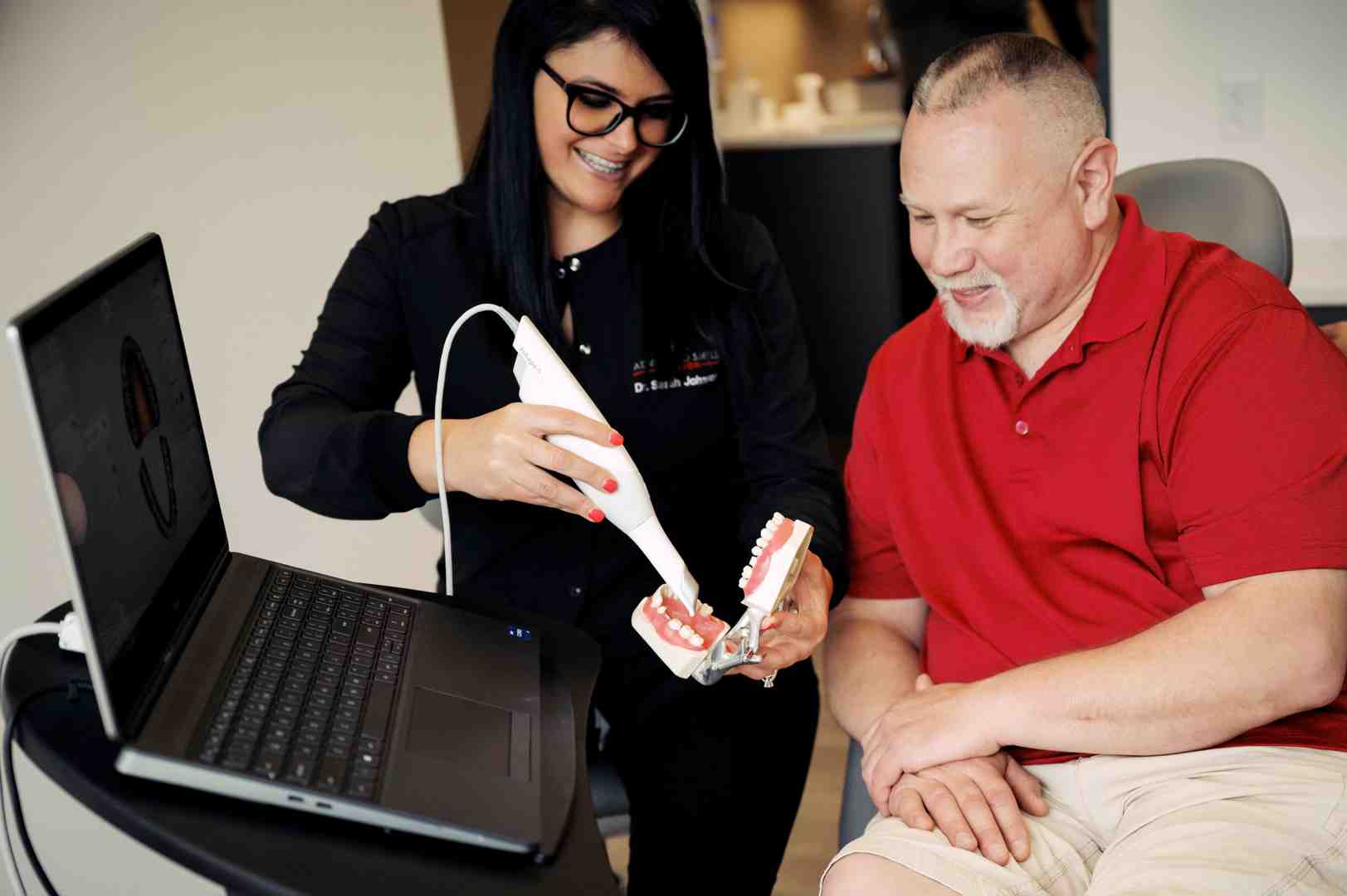
During your consultation, we'll discuss key factors like the tooth's location in your mouth, your aesthetic goals, and lifestyle habits (like teeth grinding) to recommend the best material for your specific needs.
Balancing Aesthetics, Durability, and Your Budget
The art of choosing dental crown materials is finding the sweet spot where beauty, strength, and budget meet your needs.
Aesthetics vs. Strength: Front teeth demand a natural look, making all-ceramic or high-quality zirconia the top choices. For back teeth, which handle heavy chewing, the incredible strength of zirconia or metal alloys is paramount. Gold, while not aesthetic, offers unparalleled longevity and is gentle on opposing teeth.
Cost and Investment: Cost varies by material, with all-ceramic and zirconia being premium options. Composite resin is the most economical but is best for temporary use. Metal crowns, like gold, have a material cost that can be substantial—the cost of gold crowns can range between $600-$2,500—but their durability often makes them a wise long-term investment.
If you have dental insurance, it typically covers a portion of crown costs, though specifics vary by plan. For patients without insurance, our Dental Wellness Plan offers an excellent way to receive yearly dental care at discounted rates, making quality restorations more accessible. We also work with flexible payment solutions to help spread costs over time. We believe every family in Marion deserves excellent dental care without financial stress. Where to Get Affordable Dental Crowns in Marion explores more options for making your crown investment manageable.
The bottom line? We're here to help you make an informed decision that you'll feel good about for years to come.
The Dental Crown Journey: Process, Longevity, and Care
A dental crown is a long-lasting investment in your oral health. While the average lifespan is 5 to 15 years, many crowns last much longer with proper care. This impressive longevity depends on the quality of the dental crown materials we use and your commitment to taking care of your restoration.
_compressed.jpeg "steps of getting a dental crown - dental crown materials")
The Two-Visit Process
For most traditional crowns, the process requires just two visits to our Marion office.
Your First Visit: We'll begin by numbing the area and preparing the tooth by removing a small amount of enamel to make space for the crown. Then, we take a precise impression, which is sent to a dental lab to create your custom restoration. You'll leave with a temporary crown to protect the tooth.
Your Second Visit: About two to three weeks later, you'll return. We'll remove the temporary crown, check the fit and color of your new permanent crown, and once everything is perfect, we'll bond it securely in place.
Same-Day Crown Technology
For certain dental crown materials, like zirconia, we can use advanced CAD/CAM technology to design, mill, and place your crown in a single visit. This means no temporary crown and no second appointment—a fantastic option for busy families.
How to Care for Your Crown
Caring for your crown is simple and involves the same good habits you use for your natural teeth.
Daily Brushing and Flossing: Brush twice a day, paying special attention to the gumline where the crown meets the tooth. Floss daily to remove plaque and food particles that your toothbrush can't reach.
Avoid Chewing Hard Objects: To prevent chipping or cracking, avoid chewing on ice, hard candies, popcorn kernels, or other hard items.
Use a Nightguard for Grinding: If you grind or clench your teeth (bruxism), a custom-fitted nightguard is essential to protect your crown and natural teeth from excessive force while you sleep.
Regular Dental Check-ups: Routine visits are crucial for maintaining your crown's longevity. We'll monitor its condition and catch any potential issues early. Our Dental Wellness Plan makes this preventive care easy and affordable, including two cleanings, examinations, and fluoride treatments per year.
By following these guidelines, you give your crown the best chance to serve you well for many years. Learn how to care for your new crown by visiting our dedicated resource page.
Understanding Risks and Exploring Alternatives
While dental crowns are incredibly effective, we believe in being transparent about all aspects of treatment. It's important to understand potential considerations and alternatives so you can feel confident in your decision.
Potential Risks of Dental Crowns
Even with the best dental crown materials and techniques, a few things to be aware of include:
- Tooth sensitivity: Temporary sensitivity to hot or cold is common after a crown is placed but usually fades. If it persists, please let us know.
- Chipping or breaking: Modern materials are strong, but they can chip or break if you bite down on something extremely hard.
- A loose crown: If a crown feels loose, contact us immediately. The cement can wash out over time, creating a gap where bacteria can cause decay underneath.
- Allergic reactions: Reactions to metal alloys are uncommon, but we always review your allergies to select a safe, biocompatible material for you.
- Decay at the margin: The junction where the crown meets the tooth can still develop cavities. Good oral hygiene is the best prevention.
If you ever experience discomfort or notice anything unusual with your crown, we're here to help. We offer emergency dental treatments and can often see patients the same day to address urgent concerns.
Alternatives to a Full Crown
Sometimes, a full crown is more than what's needed. Depending on the situation, we might suggest other options:
- Inlays and Onlays: These custom-made restorations are a middle-ground solution for damage that's too extensive for a filling but not severe enough for a full crown, preserving more of your healthy tooth structure.
- Veneers: These thin porcelain shells bond to the front surface of teeth to correct cosmetic issues like chips, discoloration, or misalignment. They cover only the front, while a crown covers the entire tooth. Learn more here: Veneers vs. Crowns: Expert Insights from Marion's Top Dentists.
- Dental Bonding: This is a quick, affordable fix for minor imperfections like small chips or gaps, using a tooth-colored resin applied directly to the tooth in a single visit.
- Dental Implants: If a tooth is too damaged to save, a dental implant offers a permanent, natural-feeling replacement. We specialize in endosteal dental implants, which replace the tooth root and provide a stable foundation for a new crown.
At Advanced Smiles Marion, we'll walk you through every viable option, explaining the pros and cons of each. Our goal is to help you make the best decision for your oral health and smile goals.
Your Guide to a Lasting Smile
Throughout this guide, we've explored how dental crown materials play a crucial role in restoring your teeth and protecting your smile for years to come. The truth is, there's no single "perfect" material that works for everyone. Your ideal crown depends on where the tooth is located, how you want it to look, how much force it needs to withstand, and what fits within your budget. The natural translucency of all-ceramic crowns might be perfect for your front teeth, while the exceptional strength of zirconia or metal alloys could be exactly what your molars need.
At Advanced Smiles Marion, our dentists stay at the forefront of dental innovation through continuous education and active involvement in the dental community. This commitment to excellence means you benefit from the latest techniques and materials available in restorative dentistry. We combine cutting-edge technology with a genuinely personalized approach, taking the time to understand your unique situation and guide you toward the restoration that's right for you.
Whether you need a crown to protect a tooth after a root canal, to repair damage from an accident, or simply to improve your smile's appearance, we're here to walk alongside you through every step of the process. Our goal isn't just to place a crown—it's to help you feel confident, comfortable, and informed about your dental care. We believe that advanced dental solutions should be accessible to everyone in the Marion community, which is why we offer comprehensive family care and wellness plans, including our Dental Wellness Plan for individuals and families without insurance, making quality care more affordable.
Your smile is worth investing in, and we're committed to helping you maintain optimal oral health for a lifetime. The right crown material, expertly placed and properly cared for, can serve you beautifully for many years to come.
Ready to find which crown solution will give you the lasting, healthy smile you deserve? Schedule your dental crown consultation today and let's create a treatment plan that's perfectly custom to you.

Panel 4: A President's Era
Marion's influential period under President Warren G. Harding is beautifully captured. The cardinal, representing Ohio, soars determinedly, echoing the president's forward-looking vision. The palette balances vibrant and subdued shades, mirroring the significance of this epoch.
Get in touch
Have any questions? Want to learn more?


