
Bye-Bye Ouch: The Best Meds for Post-Filling Tooth Pain
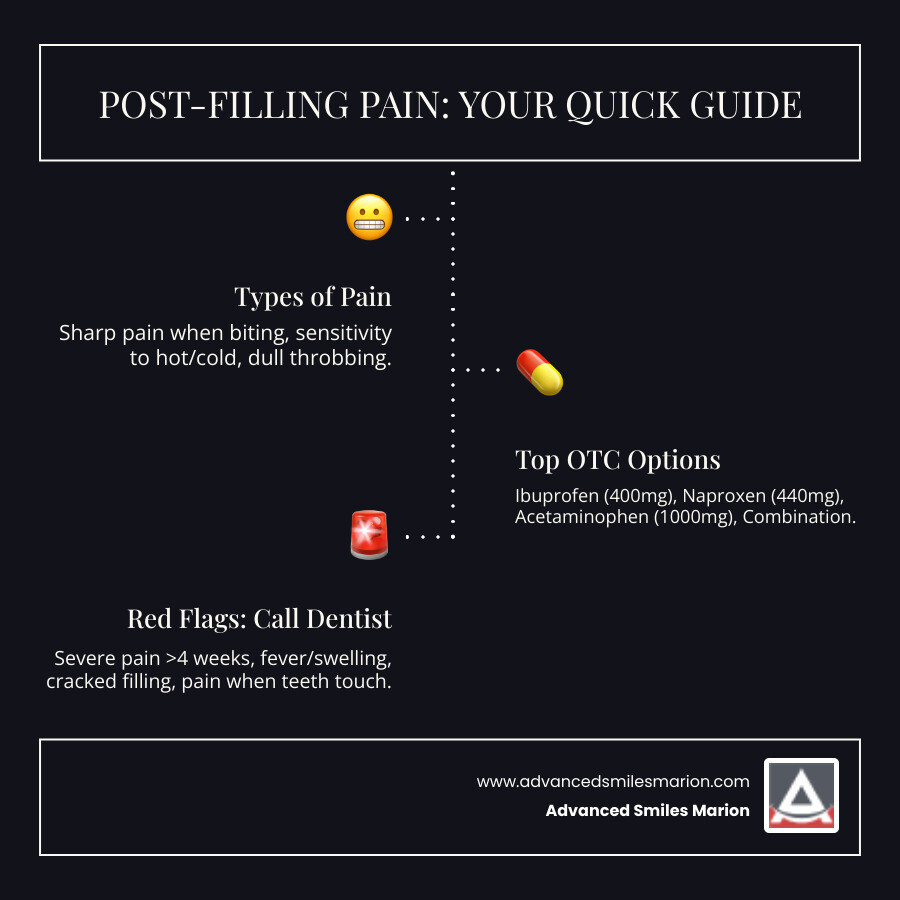

Quick Relief Guide: What Works for Post-Filling Pain
The best medicine for tooth pain after filling is a nonsteroidal anti-inflammatory drug (NSAID) like ibuprofen or naproxen sodium, either alone or combined with acetaminophen. Here's what you need to know:
Top Pain Relief Options:
| Medicine | Dosage | Why It Works |
|---|---|---|
| Ibuprofen (Advil, Motrin) | 400 mg every 4-6 hours | Reduces inflammation and blocks pain at the source |
| Naproxen Sodium (Aleve) | 440 mg every 8-12 hours | Longer-lasting anti-inflammatory relief |
| Acetaminophen (Tylenol) | 500-1000 mg every 4-6 hours | Blocks pain signals in the brain |
| Combination Therapy | NSAID + Acetaminophen together | Most effective for moderate to severe pain |
Important: NSAIDs work better than opioids for dental pain and have fewer risks. The American Dental Association recommends them as first-line treatment for acute dental pain.
You just got a filling and now your tooth hurts. Sound familiar? You're not alone. Experiencing some discomfort after a dental filling is incredibly common, and while it can be frustrating, it's usually temporary and manageable. The key is knowing which medications actually work, when to use them, and what warning signs mean you need to call your dentist.
The good news is that modern pain management for post-filling discomfort has come a long way. Research shows that simple over-the-counter medications are not only effective but often more effective than prescription opioids for dental pain. Most people find relief within a few days, and with the right approach, you can get back to eating, drinking, and smiling comfortably.
At Advanced Smiles Marion, our highly trained team of dentists stays current with the latest evidence-based pain management strategies and technologies to ensure every patient receives the most effective relief after dental procedures. The dentists in our Marion, OH office are dedicated to continuing education, advanced training, and community involvement so they can provide world-class, affordable dental solutions custom to each patient. We understand that a comfortable recovery is just as important as the procedure itself, which is why we're committed to providing clear guidance on the best medicine for tooth pain after filling and comprehensive aftercare support.
Key terms for best medicine for tooth pain after filling:
Why Your New Filling Might Be Causing Pain
Getting a dental filling is a common and necessary procedure to restore a tooth damaged by decay. If you have a cavity (a hole in your tooth caused by tooth decay), it will need to be cleared of decayed tooth matter and filled to prevent infection. While fillings are designed to relieve pain in the long run, it’s completely normal to experience some discomfort or sensitivity in the short term. Think of it like your tooth has just had a minor surgery – it needs a little time to recover!
During the filling procedure, our dentists work carefully to remove decayed material, clean the cavity, and then place the filling. This process can sometimes irritate the nerve inside your tooth, leading to temporary sensitivity. We use local anesthetic to numb the area during the procedure, but once that wears off, your tooth might feel a bit sensitive or sore. This post-procedure inflammation is a natural response as your body begins the healing process.
Common Causes of Post-Filling Discomfort
Let's explore the common culprits behind that post-filling ache. Understanding why your tooth hurts can help you manage your expectations and determine the best medicine for tooth pain after filling.
- Pulpitis (Pulp Inflammation): The pulp is the innermost part of your tooth, containing nerves and blood vessels. Sometimes, the drilling and filling process can cause pulpitis, or inflammation of the tooth pulp. This inflammation can lead to pain, especially sensitivity to hot or cold temperatures. In most cases, this is reversible pulpitis, meaning the pulp will calm down and heal on its own. However, if the inflammation is severe or becomes irreversible, it might require further treatment, like a root canal.
- High or Incorrect Bite: One of the most common reasons for pain, especially when biting down, is if the new filling is slightly too high. Even a tiny difference can throw off your bite, causing excessive pressure on the filled tooth. This issue usually becomes noticeable once the local anesthetic wears off and you start using your bite normally. It's an easy fix for your dentist, so don't hesitate to let us know!
- Referred Pain from Surrounding Teeth: Believe it or not, sometimes the pain you feel isn't directly from the filled tooth itself, but referred pain from surrounding teeth. This happens when nerves in one area transmit pain signals that are perceived in another. It's less common but can contribute to general discomfort after a filling.
- Allergic Reaction to Filling Material: While rare, some individuals can experience an allergic reaction to the materials used in the filling or even the local anesthetic. Dentists use several types of filling solutions, often either amalgam or dental composite. Amalgam fillings are silver-colored and contain a mix of metals, including mercury. Dental composite fillings are tooth-colored and made of a resin mixture. At Advanced Smiles Marion, we prioritize biocompatible materials and can discuss options like composite fillings that blend seamlessly with your natural teeth and are often preferred for their aesthetic and health benefits. If you suspect an allergic reaction (e.g., rash, swelling), contact us immediately.
Types of Pain You Might Experience
The pain after a filling isn't always a one-size-fits-all experience. You might notice different sensations, each offering clues about what's going on:
- General Tooth Sensitivity: Should a filling hurt? Yes, some discomfort is expected. Due to the procedure, you may notice some nerve pain after a tooth filling. This can manifest as a general achiness or tenderness around the filled tooth. It's often mild and gradually fades.
- Sharp Pain When Biting: If you experience a sharp jolt of pain when you bite down, especially on hard foods, it often points to a filling that's a bit too high. The new filling is taking the brunt of your bite, putting pressure on the nerve. This is usually easily resolved with a quick adjustment from your dentist.
- Sensitivity to Hot or Cold: You may also be sensitive to cold after a filling or extreme heat. This type of sensitivity is very common as the nerve within the tooth adjusts to the new filling material. It's usually temporary, and you'll notice it less and less over time.
- Dull, Throbbing Ache: A persistent, dull, throbbing ache can sometimes indicate deeper inflammation or irritation within the pulp. While often part of the normal healing process, if this type of pain is severe or doesn't improve, it's a sign to contact your dentist.
Rest assured, for most people, this pain typically settles after a few days or, at most, a couple of weeks. It's your body's way of telling you it's healing.
The Best Medicine for Tooth Pain After Filling: Your OTC Options
When that post-filling discomfort kicks in, your first thought is likely, "What can I take to make this stop?" We're here to tell you that for most cases of mild to moderate pain after a dental filling, the solution is readily available in your local pharmacy. In fact, nonopioid medications are first-line therapy for managing acute dental pain. This is excellent news because it means effective relief is accessible and comes with fewer risks than stronger prescription options.
The American Dental Association (ADA), a leading authority in dental health, recommends NSAIDs as first-line treatment for acute dental pain management. This guideline is based on extensive research and demonstrates a clear preference for over-the-counter (OTC) options. For a comprehensive look at how these medications stack up, check out our best otc medicine tooth pain guide.
Choosing the Best OTC Medicine for Tooth Pain After Filling
When it comes to selecting the best medicine for tooth pain after filling, you'll primarily be looking at two categories of over-the-counter medications: Nonsteroidal Anti-Inflammatory Drugs (NSAIDs) and Acetaminophen.
- Nonsteroidal Anti-Inflammatory Drugs (NSAIDs): These are powerhouses for dental pain because they tackle both pain and inflammation. Inflammation is a major contributor to post-filling discomfort, and NSAIDs excel at reducing it.
- Ibuprofen (e.g., Advil, Motrin): This is often our top recommendation. Ibuprofen works by inhibiting specific enzymes (cyclooxygenase, or COX) that produce prostaglandins, which are chemicals in your body that cause inflammation, fever, and pain. By reducing these prostaglandins, ibuprofen effectively calms the inflamed area around your newly filled tooth. A common dosage for dental pain is 400 mg every 4-6 hours, but always follow the package directions or your dentist's specific advice.
- Naproxen (e.g., Aleve): Similar to ibuprofen, naproxen is another NSAID that provides excellent anti-inflammatory and pain-relieving effects. Its main advantage is that it's longer-acting, meaning you typically take it less frequently (e.g., 440 mg every 8-12 hours). This can be convenient for sustained relief, especially overnight.
- Acetaminophen (e.g., Tylenol): Acetaminophen works differently from NSAIDs. Instead of reducing inflammation at the site of pain, it primarily blocks pain signals in the brain (central nervous system). This makes it a great option for pain relief, especially if you can't take NSAIDs due to medical conditions or allergies. A typical dosage ranges from 500-1000 mg every 4-6 hours, not exceeding 4000 mg in a 24-hour period.
- Combination Therapy (NSAID + Acetaminophen): For many patients, especially those experiencing moderate to severe post-filling pain, combining an NSAID (like ibuprofen) with acetaminophen can be incredibly effective. This approach targets pain through two different mechanisms – reducing inflammation with the NSAID and blocking pain signals centrally with acetaminophen. This synergistic effect often provides superior relief compared to using either medication alone. This is often the best medicine for tooth pain after filling for robust relief.
Remember to always read the labels carefully, follow dosage instructions, and avoid exceeding the maximum daily dose for any medication. If you're unsure which option is best for you, or if you have underlying health conditions, please consult with our team at Advanced Smiles Marion.
A Note on Opioids and Dental Pain
While opioids are sometimes prescribed for very severe pain, it's crucial to understand their role – or lack thereof – in managing routine post-filling discomfort.
- Risks of Opioid Use: Opioids come with significant risks, including addiction, overdose, and unpleasant side effects like nausea, constipation, and drowsiness. The CDC notes that dentists prescribe 8.6% of all opioids in the U.S.. While this percentage has decreased, the potential for harm remains a serious concern for us.
- Not Recommended for Routine Post-Filling Pain: Extensive research, including studies cited by the ADA, has consistently shown that nonopioid therapies are at least as effective as opioids for many common types of acute pain, including dental pain and pain related to a simple dental extraction. In fact, NSAIDs have been found to be more effective than opioids for surgical dental pain. This means you're often getting better, safer relief from an OTC medication.
- Reserved for Severe Cases or When NSAIDs are Contraindicated: We reserve opioid prescription drugs for rare instances where first-line nonopioid therapy is insufficient to reduce pain or when there's a medical contraindication to NSAIDs. When prescribed, they are always at the lowest effective dose and for the shortest possible duration, rarely exceeding 3 days. Our goal is always to provide effective pain relief while prioritizing your long-term health and safety.
Home Remedies and Lifestyle Tips for Pain Relief
While finding the best medicine for tooth pain after filling is a priority, medication is just one piece of the puzzle. Supporting your body's natural healing process with simple home remedies and smart lifestyle choices can make a significant difference in your comfort. These strategies work hand-in-hand with your chosen pain reliever to provide comprehensive relief. For more general advice on soothing dental discomfort, explore our dental pain remedy resources.
Soothing Home Remedies to Try
These easy-to-implement remedies can provide welcome relief and help calm your irritated tooth and surrounding tissues:
- Warm Saltwater Rinse: This classic remedy is a champion for oral healing. Dissolve 1/2 teaspoon of salt in 8 ounces of warm water and gently swish it around your mouth for about 30 seconds, 2-3 times a day. The warm water helps soothe the area, and the salt acts as a natural antiseptic, reducing bacteria and promoting healing. The Mayo Clinic lists this as a key first aid tip for toothaches.
- Cold Compress for Swelling: If you experience any swelling or localized tenderness on your cheek near the filled tooth, a cold compress can be very effective. Wrap an ice pack or a bag of frozen vegetables in a thin cloth and apply it to the outside of your cheek for 15-20 minutes at a time, with breaks in between. This helps to numb the area and reduce inflammation.
- Desensitizing Toothpaste: If your primary symptom is sensitivity to hot, cold, or even air, using a toothpaste specifically designed for sensitive teeth can be beneficial. These toothpastes contain compounds that help block microscopic tubules in your tooth enamel, reducing the transmission of sensitivity signals to the nerve. It might take a few days of consistent use to notice a difference.
- Clove Oil (Eugenol): Clove oil has been used for centuries as a natural pain reliever for toothaches due to its active ingredient, eugenol, which has antiseptic and anesthetic properties. You can dab a tiny amount of pure clove oil onto a cotton swab and apply it gently to the affected tooth and surrounding gum. Be cautious not to swallow it, and remember that a little goes a long way – it has a strong taste!
Home Remedies to Complement the Best Medicine for Tooth Pain After Filling
Beyond immediate relief, certain dietary and oral hygiene habits can significantly support your healing process and prevent further irritation:
- Dietary Adjustments: Your newly filled tooth might be a bit sensitive, so treat it gently.
- Avoid very hot or cold foods/drinks: Extreme temperatures can trigger sharp pain or prolonged sensitivity. Stick to lukewarm or room-temperature items for the first few days.
- Avoid sugary and acidic foods: Sugary foods can contribute to bacterial growth and decay, while acidic foods (like citrus fruits, sodas, and some juices) can irritate sensitive tooth enamel and gum tissues. Give your tooth a break from these for a while.
- Chew on the opposite side of your mouth: This might seem obvious, but consciously directing your chewing to the unaffected side can prevent unnecessary pressure on the healing tooth, helping to reduce pain and allowing the filling to settle properly.
- Gentle Oral Hygiene: It's vital to maintain good oral hygiene, but be extra gentle around your new filling.
- Use a soft-bristled toothbrush and brush with light pressure.
- Continue to floss, but do so carefully around the filled tooth to avoid dislodging the filling or irritating the gums.
- Regular brushing and flossing help keep the area clean and free from food debris that could cause further irritation or infection.
By incorporating these simple practices, you're not only finding additional comfort but also promoting a smoother, faster recovery for your tooth.
When to Call Your Dentist: Don't Ignore These Signs
While experiencing some discomfort after a dental filling is a normal part of the healing process, it's equally important to know when that discomfort crosses the line into something more serious. Most pain will subside on its own, especially with the help of the best medicine for tooth pain after filling and home remedies. However, some symptoms are red flags that warrant immediate attention from our dental team. Ignoring these signs can lead to bigger problems down the road, potentially requiring more extensive emergency treatment for toothache.
How Long Should Pain Last?
Understanding the typical timeline for post-filling pain can help you differentiate between normal healing and a potential issue:
- Normal Sensitivity Lasts 2-4 Weeks: Tooth sensitivity after a filling typically reduces and disappears within two to four weeks. This sensitivity is often to hot or cold temperatures and should gradually lessen over time.
- Pain Should Decrease Over Time, Not Worsen: While it's common for pain to be noticeable for a few days, the crucial indicator is its trajectory. The discomfort should steadily improve. If your pain intensifies or remains constant after the initial few days, it's a cause for concern.
- Pain After a Few Days is Typical: It's perfectly normal to feel some soreness or tenderness for the first 24-72 hours. This is usually due to the manipulation of the tooth during the procedure and the nerve settling down.
Warning Signs That Require a Dental Visit
If you experience any of the following symptoms, please don't hesitate to contact Advanced Smiles Marion right away. We offer emergency dental treatments and are often able to see people the same day for urgent concerns. These are signs that your tooth might need further evaluation and intervention:
- Severe, Throbbing, or Constant Pain: If your pain is excruciating, throbbing relentlessly, or constant and doesn't respond to over-the-counter pain relievers, it's a definite sign to call us. This could indicate deeper nerve irritation or infection.
- Pain That Lasts Longer Than Four Weeks: While sensitivity can linger for a few weeks, persistent pain that doesn't improve or worsens beyond four weeks is not normal. This suggests an underlying problem that needs to be addressed.
- Fever or Swelling in the Cheek/Gums: Swelling around the filled tooth, in your gums, or on your cheek, especially if accompanied by a fever, can indicate an infection. This needs immediate professional attention.
- Pain When Your Teeth Touch: If you experience sharp pain when your teeth come together, it might mean the filling is still too high, or there could be a crack in the tooth or filling. This can usually be fixed with a simple adjustment.
- A Cracked or Loose-Feeling Filling: If you notice any visible damage to the filling, or if it feels loose or like it has shifted, contact us immediately. A compromised filling won't protect your tooth and can lead to further decay or sensitivity.
- Signs of Allergic Reaction: Though rare, if you develop a rash, itching, or difficulty breathing, seek immediate medical attention as this could be an allergic reaction to the filling material or anesthetic.
These situations go beyond typical post-filling discomfort and fall into the category of dental emergencies. Our team is here to provide prompt and effective care for such issues, ensuring your oral health is protected.
Conclusion: Achieving a Comfortable, Pain-Free Smile
Navigating the discomfort that can follow a dental filling is a common experience, but as we've explored, it's one that is largely manageable with the right approach. Knowing the best medicine for tooth pain after filling – primarily non-opioid medications like NSAIDs – is your first line of defense. These readily available over-the-counter options, often used in combination, are proven to be highly effective in reducing both pain and inflammation, leading to a smoother recovery.
Beyond medication, simple yet powerful home remedies such as warm saltwater rinses, cold compresses, and dietary adjustments provide invaluable support, complementing the effects of pain relievers and promoting natural healing. These small changes can make a big difference in your daily comfort.
Listening to your body is key. While some temporary discomfort is expected, it's crucial to recognize the warning signs that indicate a need for professional attention. Persistent, severe, or worsening pain, along with swelling or fever, should never be ignored. Our expert dentists at Advanced Smiles Marion are dedicated to ensuring your comfort and health after any procedure. We pride ourselves on offering world-class, affordable dental solutions custom to each patient, and our commitment extends beyond the dental chair to your complete recovery.
We understand that a pain-free smile is a happy smile. Whether you're considering a new filling, exploring options like Invisalign, managing TMJ Pain, brightening your smile with teeth whitening, or looking into advanced solutions like dental implants or veneers, our team is here to guide you. We also offer cutting-edge laser treatments for TMJ pain, canker sore healing, and periodontal disease, providing advanced care right here in Marion, OH. Our comprehensive services, from crowns and root canals to digital dentures and oral hygiene wellness check-ups, are designed to support your overall oral health.
For those without insurance, our Dental Wellness plan now offers 2 fluoride treatments a year, alongside other discounted services, ensuring everyone can access the dental care they need. For comprehensive and compassionate care, explore our family dentistry services. Contact Advanced Smiles Marion today – we're ready to help you achieve and maintain your healthiest, most comfortable smile.
Get in touch
Have any questions? Want to learn more?


