
Best OTC Meds for Tooth Pain: What Works When Your Tooth Screams?
_compressed.jpeg)

Why Quick Relief Matters When Tooth Pain Strikes
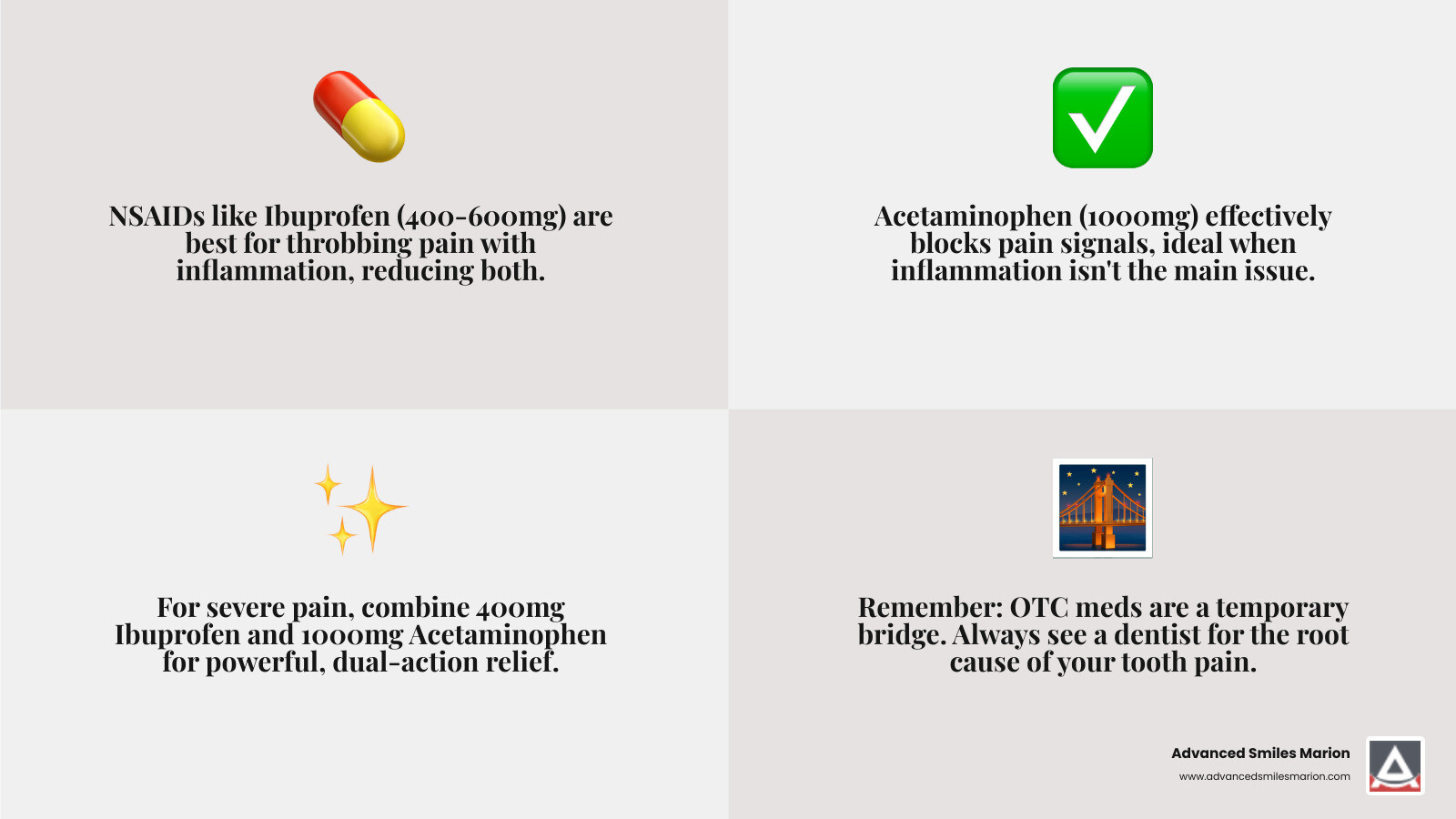
Best OTC medicine for tooth pain includes NSAIDs like ibuprofen (400-600mg every 6 hours) and naproxen, which reduce both pain and inflammation. For pain without swelling, acetaminophen (1000mg) works well. Topical benzocaine gels provide fast numbing relief. The most effective combination? 400mg ibuprofen plus 1000mg acetaminophen taken together.
Quick Answer: Top OTC Options for Tooth Pain
| Medication Type | Best For | How It Works |
|---|---|---|
| Ibuprofen (Advil, Motrin) | Throbbing pain with swelling | Reduces inflammation and blocks pain signals |
| Naproxen (Aleve) | Long-lasting relief from inflammation | Reduces swelling for up to 12 hours |
| Acetaminophen (Tylenol) | General pain without inflammation | Blocks pain signals in the brain |
| Benzocaine Gels (Orajel, Anbesol) | Immediate numbing | Blocks nerve signals at the tooth |
| Ibuprofen + Acetaminophen | Severe pain | Dual-action relief with fewer side effects than opioids |
Tooth pain has a knack for arriving at the worst possible moment. That sudden throb or sharp jolt can stop you in your tracks, making simple tasks feel impossible.
Here's the reality: OTC medications are a bridge, not a solution. They can quiet the pain while you get to a dentist and help you sleep through the night, but they won't fix the underlying problem.
The good news is that you have effective options. Research shows that over-the-counter pain relievers can be just as effective as prescription opioids for dental pain—with far fewer risks.
This guide breaks down which medications work best for different types of tooth pain, how they work, and when it's time to stop relying on temporary fixes and get professional help.
The dentists at Advanced Smiles Marion have decades of combined experience treating tooth pain. Our team stays current on the latest research and treatment advances, including laser treatments for advanced pain management. We know tooth pain doesn't wait for business hours—that's why we offer same-day emergency dental appointments for most cases.
Oral Painkillers: Attacking Tooth Pain from the Inside
When tooth pain hits, oral pain medications are often your fastest path to comfort while you arrange a dental visit. They work in two fundamentally different ways: some primarily block pain signals traveling to your brain, while others go a step further by reducing inflammation at the source of your discomfort. Knowing this difference helps you choose the best OTC medicine for tooth pain for your specific situation.
Think of it this way: Acetaminophen acts as a gatekeeper, stopping pain messages from reaching your brain. NSAIDs, on the other hand, are like firefighters—they put out the inflammatory response causing swelling and throbbing at your tooth.
These medications work systemically, making them excellent for general aches or deep, radiating pain. They give you breathing room to function while you schedule your appointment with us. For a deeper dive into all your medication options, visit our comprehensive guide on Best Medicine for Tooth Pain.
NSAIDs: The Best OTC Medicine for Tooth Pain with Inflammation
If your tooth pain comes with swelling, heat, or a throbbing sensation, NSAIDs are likely your best choice. These nonsteroidal anti-inflammatory drugs tackle both pain and inflammation, making them highly effective for dental discomfort.
Ibuprofen (Advil, Motrin) and naproxen (Aleve) are the heavy hitters here. They work by blocking enzymes that produce inflammation and pain signals. This dual-action approach is why they're so effective for toothaches, especially when you can see or feel swelling.
The American Dental Association backs this up, with a new ADA guideline recommends NSAIDs as the first-line treatment for dental pain. Research shows that 400mg of ibuprofen combined with 1000mg of acetaminophen outperforms prescription opioids for dental pain, with fewer side effects.
For ibuprofen, adults can take 400-600mg every 4-6 hours as needed (max 3200mg/24 hours unless a doctor advises otherwise), with relief in 20-30 minutes. For naproxen, take 220-440mg every 8-12 hours for longer-lasting relief, which may take 30-60 minutes to kick in.
NSAIDs are ideal for throbbing pain, visible swelling, or after dental procedures. If you're weighing your options, our guide on the Best OTC Pain Reliever for Toothache can help.
Acetaminophen: Blocking Pain Signals in the Brain
Acetaminophen (Tylenol) takes a different approach. Instead of fighting inflammation, it works in the brain, turning down the volume on pain signals. This makes it great for general pain and fever but less effective if your primary issue is swelling.
Acetaminophen is especially valuable if you can't take NSAIDs due to stomach issues, allergies, or other health conditions. Adults typically take 650-1000mg every 4-6 hours, with a daily maximum of 3000-4000mg (always check the label). Relief usually begins within 30-60 minutes.
Here's where acetaminophen really proves its worth: when combined with ibuprofen. The combination of 400mg ibuprofen with 1000mg acetaminophen is incredibly powerful because the two drugs attack pain through different pathways. Together, they provide relief that's often stronger than prescription opioids, as confirmed by research on combination therapy effectiveness.
Alternating these medications every six hours can also provide continuous coverage. Our team at Advanced Smiles Marion often recommends this approach for severe dental pain, as sometimes the best OTC medicine for tooth pain is a smart combination.
Aspirin: An Old Standby with Important Cautions
While aspirin can reduce both pain and inflammation, it comes with serious cautions for toothache relief.
First and most important: never place aspirin directly on your tooth or gum. This old remedy is harmful, as aspirin's acidity can cause painful chemical burns on gum tissue. Always swallow aspirin with a full glass of water and food.
Aspirin can also cause stomach irritation and ulcers with regular use and thins your blood, which is risky before dental procedures. Never give aspirin to children or teenagers due to the risk of Reye's syndrome, a rare but serious condition.
Given these risks, our dentists at Advanced Smiles Marion typically recommend ibuprofen or acetaminophen as safer first-choice options for acute tooth pain.
Topical Anesthetics: Numbing the Pain at the Source

When pain is concentrated in one spot, topical anesthetics offer targeted, fast-acting relief by numbing the specific nerve causing discomfort. These treatments, available as gels or liquids, block pain signals directly at the nerve endings in your mouth.
Think of them as a pause button for your pain—they won't fix the underlying problem, but they provide breathing room. Topical treatments are excellent for a sensitive tooth or irritated gum and can be used while waiting for oral pain relievers to take effect. For a broader look at different solutions, visit our Toothache Medicine page.
Benzocaine Gels: The Best OTC Medicine for Tooth Pain Numbing
Benzocaine is a powerful topical anesthetic found in many OTC oral pain relievers. It works by blocking sodium from entering nerve cells, which stops pain signals before they start.
Benzocaine gels are popular for their speed, providing temporary numbness within minutes. This can be a huge help when you're struggling to eat or sleep. Clinical trials have confirmed that benzocaine effectively reduces acute toothache pain when used at proper dosages.
However, safety is a major concern, especially for young children. The FDA warning on benzocaine is critical: do not use it on children under 2 years old. This is due to the risk of methemoglobinemia, a rare but dangerous condition where the blood's ability to carry oxygen drops. Warning signs include pale, gray, or blue skin, lips, or nail beds, along with shortness of breath, fatigue, or confusion.
For adults, benzocaine is generally safe for short-term use. If you find yourself using it daily, it's a sign that you need professional dental care. Persistent pain is your body's red flag.
Natural Topical Options: Clove Oil (Eugenol)
Clove oil is a traditional remedy for toothaches, and modern science confirms its effectiveness. The active compound, eugenol, acts as both a natural anesthetic and an antibacterial agent. This dual action numbs pain while fighting bacteria that may be contributing to your discomfort. You can explore the scientific evidence on clove oil's properties to learn more.
The key to using clove oil safely is dilution. Pure clove oil is too concentrated and can cause irritation.
Here's the right way to use it: Mix a couple of drops of clove oil with a teaspoon of a carrier oil (like olive or coconut oil). Soak a cotton ball in the mixture and gently press it against the painful tooth or gum for 5-10 minutes. You can repeat this every few hours, but always remove the cotton ball afterward.
Properly diluted clove oil can be an effective natural option and one of the best OTC medicine for tooth pain choices. For more natural remedies, check out our Dental Pain Remedy page.
Smart & Safe Relief: Home Remedies and Best Practices
The best OTC medicine for tooth pain is even more effective when paired with smart home care strategies. These simple tips can create a comfort plan that makes the wait for your dental appointment more manageable. Most of what you need is likely already in your home. For a comprehensive look at managing tooth pain, visit our guide on How to Get Rid of Toothache.
Safe Dosing and Medication Habits
Using pain relievers correctly is crucial. Never assume "more is better"—following label instructions is your safety net. Exceeding the maximum daily dosage can lead to serious health problems, such as liver damage from too much acetaminophen or stomach bleeding from NSAIDs.
A common mistake is taking multiple products containing the same active ingredient. Hidden acetaminophen is often found in cold and flu remedies, so always check the active ingredients list before taking a new medication.
Another critical rule: never mix different NSAIDs, like ibuprofen and naproxen. This increases the risk of side effects without adding relief. The safer and more effective combination is an NSAID with acetaminophen.
Always consider your personal health history. If you have kidney disease, heart conditions, or stomach ulcers, check with your doctor or our dental team before taking any pain reliever. Remember age restrictions, avoiding aspirin for children and benzocaine for toddlers under two.
Reading the label every time is a quick step that can prevent serious complications.
Dentist-Approved Home Remedies for Added Comfort
These simple remedies can provide significant comfort alongside your OTC medication.
Saltwater Rinses: This time-tested remedy works because salt is a natural disinfectant that reduces inflammation. Mix a half-teaspoon of salt in a glass of warm water, swish for 30 seconds, and spit. Repeat several times a day, especially after meals.
Cold Compress: For swelling or throbbing pain, a cold compress is a go-to. Wrap an ice pack in a cloth and apply it to the outside of your cheek for 10-20 minutes at a time to numb the area and reduce inflammation.
Head Elevation: To ease throbbing pain at night, lift your head with an extra pillow or two. This reduces blood flow to the head, decreasing the pulsing sensation.
Diluted Hydrogen Peroxide Rinses: For gum irritation, a hydrogen peroxide rinse can help. Mix one part 3% hydrogen peroxide with two parts water, swish for 30-60 seconds, and spit it out completely. Never swallow it.
Peppermint Tea Bags: Peppermint has mild pain-relieving properties. Steep a tea bag, let it cool, and apply the chilled bag directly to the painful tooth for temporary comfort.
Garlic: Crushing a garlic clove into a paste and applying it to the affected area may help due to garlic's natural antibacterial properties.
These remedies, combined with the best OTC medicine for tooth pain, can help you manage discomfort while you wait for your appointment. At Advanced Smiles Marion, we offer same-day emergency appointments for most cases, so you won't have to wait long for a permanent solution.
When to Call the Dentist: Recognizing the Limits of OTC Relief
Over-the-counter medications quiet the pain, but they don't fix the underlying problem. They are lifesavers for getting through the night or a long weekend, but they don't heal cavities, cure infections, or repair cracked teeth.
Think of the best OTC medicine for tooth pain as a temporary bridge. Delaying professional treatment allows the problem—a cavity, crack, or infection—to worsen. What might be a simple filling can become a root canal or worse.
At Advanced Smiles Marion, we often see patients who managed their pain with OTC meds for weeks, hoping it would disappear. It never does. Instead, the problem becomes more severe. For insights on what effective treatment looks like, visit our Best Treatment for Toothache page.
Signs Your Tooth Pain Is a Dental Emergency
Your body sends distress signals when something needs immediate attention. Call us if you experience any of the following:
- Pain lasting over two days: If OTC medication isn't enough after 48 hours, the problem is likely worsening.
- Severe, throbbing pain: Pain that disrupts sleep or concentration often signals a serious issue like an infection or nerve involvement.
- Swelling in your face, jaw, or neck: This is a major red flag for an infection that is spreading and can become dangerous.
- Fever with tooth pain: This indicates your body is fighting a systemic infection that requires immediate professional care.
- A foul taste or a pimple-like bump on your gums: This often points to a draining abscess that won't heal on its own.
- Difficulty breathing or swallowing: This is a medical emergency. Go to the nearest emergency room or call 911 immediately.
We offer Emergency Treatment for Toothache at Advanced Smiles Marion and can see patients the same day in most situations.
What Could Be Causing Your Tooth Pain?
A toothache is an alarm system. Understanding the potential causes highlights why a professional diagnosis is essential.
- Deep cavities: A common cause where decay reaches the sensitive inner pulp of the tooth, causing pain with temperature changes or sweets.
- Tooth abscesses: Pockets of pus from a bacterial infection that cause severe, throbbing pain and require immediate treatment, often with Antibiotics for Toothache Infection.
- Cracked or fractured teeth: Even a hairline fracture can expose the tooth's sensitive inner layers, causing sharp pain when biting.
- Gum disease: Advanced gum disease (periodontitis) can cause inflammation, gum recession, and pain around the gumline.
- Infected or inflamed pulp (pulpitis): When the nerve inside the tooth is irritated or infected, a Root Canal Treatment may be the only way to save the tooth.
- Grinding or clenching (bruxism): This puts immense pressure on teeth, leading to pain and sensitivity. We offer advanced relief with laser treatments for related TMJ pain.
- Impacted wisdom teeth: Teeth without enough room to erupt can cause pain, swelling, and infection.
Only a professional examination can pinpoint the cause. Our dentists at Advanced Smiles Marion use advanced technology for an accurate diagnosis, so we can create a treatment plan that solves the problem permanently.
Your Next Step: From Temporary Relief to a Permanent Solution
You now know the best OTC options for tooth pain, from anti-inflammatories like ibuprofen to pain blockers like acetaminophen and topical numbing agents. You've also learned how to combine them safely and use home remedies for added comfort.
These over-the-counter options are your bridge to the care you truly need. However, these medications only mask the pain; they don't fix the underlying issue. A cavity will grow, an infection can spread, and a crack may deepen. Delaying treatment makes the problem more complex, more painful, and more costly to resolve.
The good news is you don't have to steer this alone. At Advanced Smiles Marion, our team of highly educated and experienced dentists is ready to help you move from temporary relief to a lasting solution. We bring cutting-edge technology to Marion, OH, from advanced imaging for accurate diagnosis to innovative treatments like laser therapy for TMJ pain, canker sore healing, and periodontal disease.
Our practice provides the full spectrum of dental care your family needs, including routine oral hygiene, cosmetic improvements like Invisalign and teeth whitening, and restorative treatments such as dental implants and crowns. We also provide urgent care for dental emergencies, root canal therapy, and digital dentures. For families without insurance, our Dental Wellness Plan makes quality care affordable and now includes two fluoride treatments a year.
We understand that tooth pain is urgent. That's why we offer emergency dental treatments and can see you the same day in most cases. You don't have to suffer through another sleepless night or miss out on life because of dental pain.
Your toothache is a sign that it's time to listen. Let our compassionate team provide the accurate diagnosis and personalized treatment you deserve. Together, we'll get you to a healthy, pain-free smile that lasts.

Panel 6: Hope on the Horizon
The mural culminates in a vision of Marion's future, one marked by technological advancements, sustainability, and community togetherness. The cardinal, elevated above a futuristic cityscape, looks ahead with optimism, its backdrop a blend of colors signifying hope.
Get in touch
Have any questions? Want to learn more?


