
Smile for the Scanner: The Ultimate Gallery of 3D Printed Teeth

What Pictures of Digital Dentures Actually Show (And Why It Matters)
Pictures of digital dentures reveal something that words alone can't fully capture: a level of precision, color realism, and natural-looking detail that's hard to believe came from a scanner and a printer.
Here's a quick visual summary of what you'll typically see in digital denture images:
- Smooth, seamless surfaces milled from a single block of material — no visible seam lines
- Natural gum tones with subtle color variation, not a flat pink
- Lifelike tooth translucency that mimics the way real teeth catch light
- Precise arch shapes designed digitally to match a patient's exact mouth anatomy
- Before-and-after comparisons showing improved facial support and smile confidence
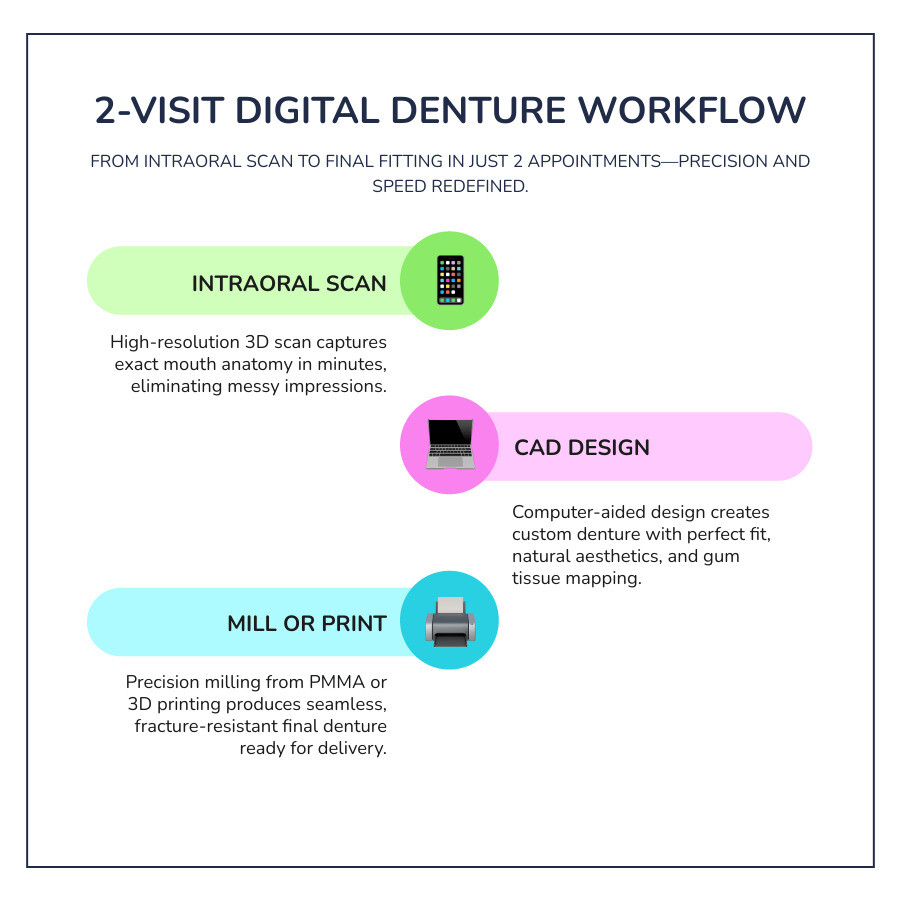
These aren't just cosmetic wins. The images also document the process — from intraoral scans and CAD software renders to the final milled or printed prosthetic. Each step is captured with clinical accuracy.
Traditional dentures are made by hand using molds, wax, and acrylic. Digital dentures start with a scan, move through computer-aided design (CAD), and are precision-crafted using CAD/CAM milling or 3D printing technology. The difference shows up clearly in photos — and even more clearly in how they fit.
The highly educated dental team at Advanced Smiles Marion stays current with the latest digital dentistry advances, bringing that expertise directly to families in Marion, OH who are looking for better, faster, and more comfortable denture solutions. This guide walks through the full visual story of digital dentures — from the first scan to the final smile — so you know exactly what to expect.
Quick pictures of digital dentures definitions:
- digital denture centre
- digital denture design
- do digital dentures fit better
Visualizing the Difference: Pictures of Digital Dentures vs. Traditional Acrylics
When you look at a side-by-side comparison of traditional and digital dentures, the differences are striking. Traditional dentures are often the result of a labor-intensive "analog" process. This involves messy putty impressions and manual tooth setting in wax. Because the acrylic used in traditional methods is cured using heat, it can suffer from "polymerization shrinkage." This is a fancy way of saying the material shrinks slightly as it hardens, which can lead to a less-than-perfect fit.
In contrast, pictures of digital dentures showcase a monolithic design. This means the denture is often created from a single, high-density block of material. According to the Expert consensus on digital restoration, this digital approach drastically reduces human error. Because there is no curing shrinkage, the final product is an exact replica of the digital design. We often find that patients are most impressed by the "intaglio" surface—the part that touches your gums—which is visible in high-res photos as a perfectly contoured map of the mouth. You can learn more about this in our guide on The Fit Factor: Are Digital Dentures Superior.
High-Definition Pictures of Digital Dentures and 3D Models
The journey to a new smile now begins in a virtual world. Modern pictures of digital dentures often include holographic analysis and virtual interfaces where our dentists can rotate a 3D model of your jaw on a screen. Using intraoral scans, we capture every ridge and curve of your gum tissue without a single tray of "goop."
These 3D renders allow for "Simply Natural" aesthetics. For example, Simply Natural™ Digital Dentures are designed to be definitive prosthetics that are only fabricated after the mouth has fully healed, ensuring the digital model matches the stable anatomy of your jaw. This level of planning means we can show you exactly how your teeth will look before they are even manufactured.
Aesthetic Features in Pictures of Digital Dentures
One of the most common myths is that 3D-printed teeth look "fake" or like "piano keys." However, high-quality photos prove the opposite. Advanced systems like TrueDent® 3D Printed Digital Dentures use multi-material printing. This allows the printer to create the teeth and the gums in one continuous, monolithic print while using different shades and translucencies.
In these images, you can see:
- Translucency: The tips of the teeth allow some light to pass through, just like natural enamel.
- Color Matching: We can match the shade to your remaining natural teeth or your preferred brightness.
- Gum Textures: The "gingiva" or gum portion isn't just flat pink; it features stippling and vascular-like details that look real even under close inspection.
The Science of the Smile: Materials and Manufacturing Captured in Images
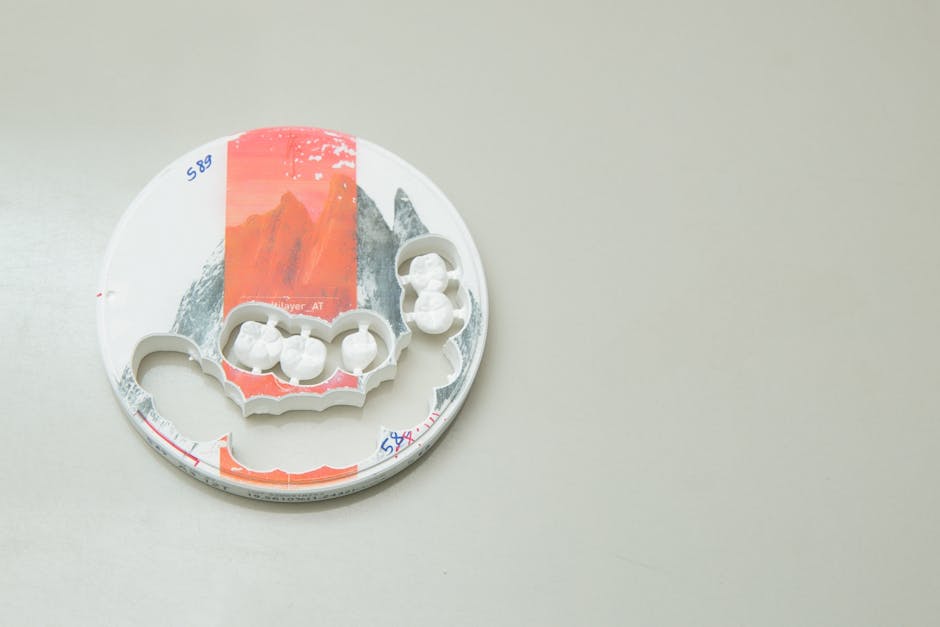
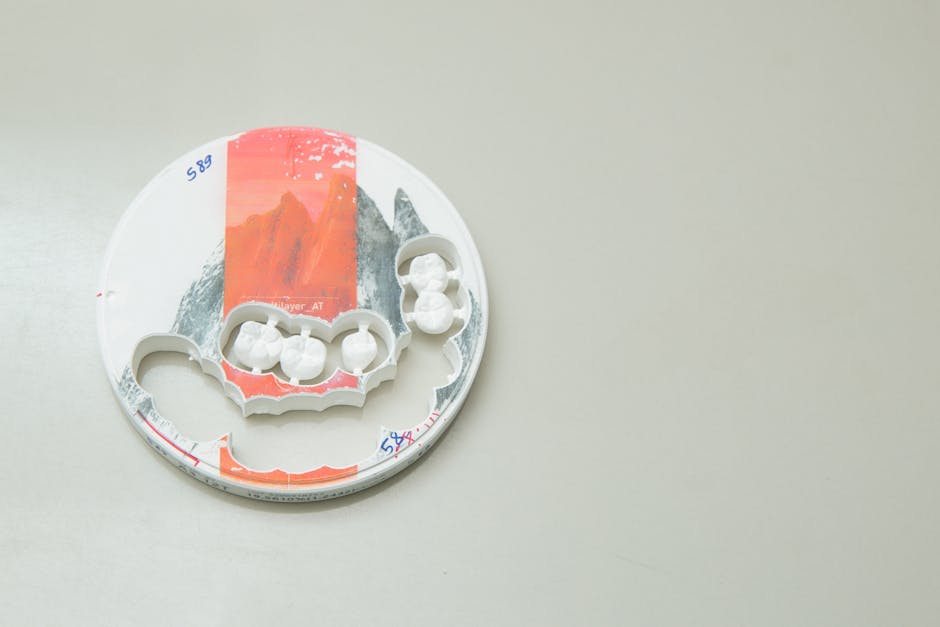
The strength of a digital denture isn't just in how it looks, but what it's made of. Most digital dentures are crafted from high-density Polymethyl Methacrylate (PMMA). Unlike the acrylic used in traditional labs, which is mixed by hand, this PMMA is cured under massive industrial pressure into "pucks" or disks.
This process creates fracture-resistant materials that are significantly tougher than their ancestors. Statistics show that the base of these dentures has a flexural strength of approximately 96 MPa, while the teeth reach 110 MPa. When you see a photo of a milling machine carving a denture out of one of these pucks, you are seeing the creation of a "monolithic" structure—one solid piece that is less likely to chip or harbor bacteria. This Digital Denture Design process is what allows for such a durable result.
Manufacturing Precision in Pictures of Digital Dentures
There are two main ways we bring these digital designs to life: milling (subtractive) and 3D printing (additive). Milling involves a computer-controlled diamond burr carving the denture from a puck. 3D printing, such as Carbon's technology, uses light to solidify liquid resin layer by layer.
Both methods result in greater fracture resistance because the materials are more uniform and less porous than hand-poured acrylic. In pictures, a 3D-printed denture base looks incredibly smooth, which helps prevent the buildup of Candida albicans (the yeast that causes denture thrush).
Workflow Advantages: From Intraoral Scans to Final Delivery
The most beautiful picture in the digital denture process might be the one of the patient leaving the office after only two visits. Traditional dentures often require five or more appointments. The dental care experience is completely transformed by the speed of the digital workflow.
By using Digital Dentures technology, we condense the timeline significantly:
| Step | Traditional Dentures | Digital Dentures (Advanced Smiles Marion) |
|---|---|---|
| Impression | Messy putty molds | Fast intraoral scan |
| Try-In | Multiple wax try-ins | Virtual design or 3D-printed prototype |
| Delivery | 4-6 weeks average | As little as 2-3 appointments |
| Adjustments | Frequent due to shrinkage | Minimal due to precision fit |
Digital Records and Easy Replacements
One of the greatest "hidden" benefits of this digital workflow is the permanent digital record. In the past, if you lost or broke your Denture, you had to start the entire process over—new molds, new measurements, and new waiting periods.
With digital technology, your "smile file" is saved indefinitely. If Fido decides your denture is a chew toy, we can simply pull up your file and print or mill an identical replacement. Our remake policy and the ability to provide a "digital spare" give our Marion patients incredible peace of mind.
Real-World Results: Before and After the Digital Transformation
The true test of any dental technology is how it looks in a patient's mouth. A before-and-after gallery of digital denture patients often shows more than just new teeth; it shows a restored facial structure. When teeth are lost, the jawbone can shrink, and the lips can lose support, leading to a "collapsed" look.
Digital dentures allow us to precisely calculate the "vertical dimension"—the distance between your nose and chin—to restore your natural face shape. While the overall cost is a factor, most patients find the investment pays off in self-confidence. If you're curious about the numbers, check out our Digital Dentures Cost Complete Guide. That adjusting to dentures is a journey, but the precision fit of a digital prosthetic makes the transition much smoother.
Frequently Asked Questions about Digital Dentures
How long do 3D printed dentures last?
With proper care, digital dentures typically last 10 to 15 years, which is significantly longer than the 5 to 10-year lifespan of traditional versions. Their durability comes from the high-density PMMA or advanced resins used in the manufacturing process. To keep them in top shape, we recommend using a gentle denture cleaning solution and a soft-bristled brush. It is also vital to remove them at night to reduce the risk of gum irritation and infections.
Are digital dentures more expensive than traditional ones?
While the technology is advanced, the costs are more accessible than many realize. Lab costs for 3D-printed options generally run between $300 and $500, while premium milled versions range from $500 to $650. For patients, the cost per arch typically falls between $700 and $2,500. While Medicare, for instance, often has limited coverage for dental prosthetics, we offer wellness plans to help make these high-tech solutions affordable. The long-term value is high because they require fewer adjustments and remakes.
Can you eat normally with digital dentures?
Yes! Because of the precision fit and CAD-designed occlusion (how your teeth bite together), many patients find eating much easier than with traditional dentures. There is still a learning curve—we recommend starting with soft foods—but the monolithic design means there are no teeth to "pop out" of the base.
This Evolution of dentures from hand-made to computer-engineered has made "denture slips" while eating a thing of the past for many of our patients.
Conclusion
At Advanced Smiles Marion, we believe that everyone in Marion, OH deserves a smile they are proud to show off. Our highly educated dental team is dedicated to using the best technology available to make your care efficient and comfortable. Whether you are interested in the precision of digital dentures or the ultimate stability of endosteal dental implants (which average about $4500 per tooth), we are here to guide you.
For those without insurance, our Dental Wellness Plan is a fantastic way to access discounted care, including two fluoride treatments a year to keep your remaining natural teeth and gums healthy. We also feature advanced laser treatments for TMJ pain, canker sore healing, and periodontal care.
If you have a dental crisis, don't wait—we offer emergency dental treatments and can often see you the very same day. From your first intraoral scan to your final fitting, we are committed to providing the game-changing innovation your oral health deserves.
Ready to see the difference for yourself? Digital Dentures: The Game-Changing Innovation in Marion's Oral Care is just a click away. Contact us today to schedule your consultation!
Get in touch
Have any questions? Want to learn more?


