
The Tooth, the Whole Tooth, and Nothing But the Tooth


Your Mouth Is the Gateway to Your Overall Health
Oral health and hygiene affects far more than just your teeth and gums — it plays a direct role in your overall well-being.
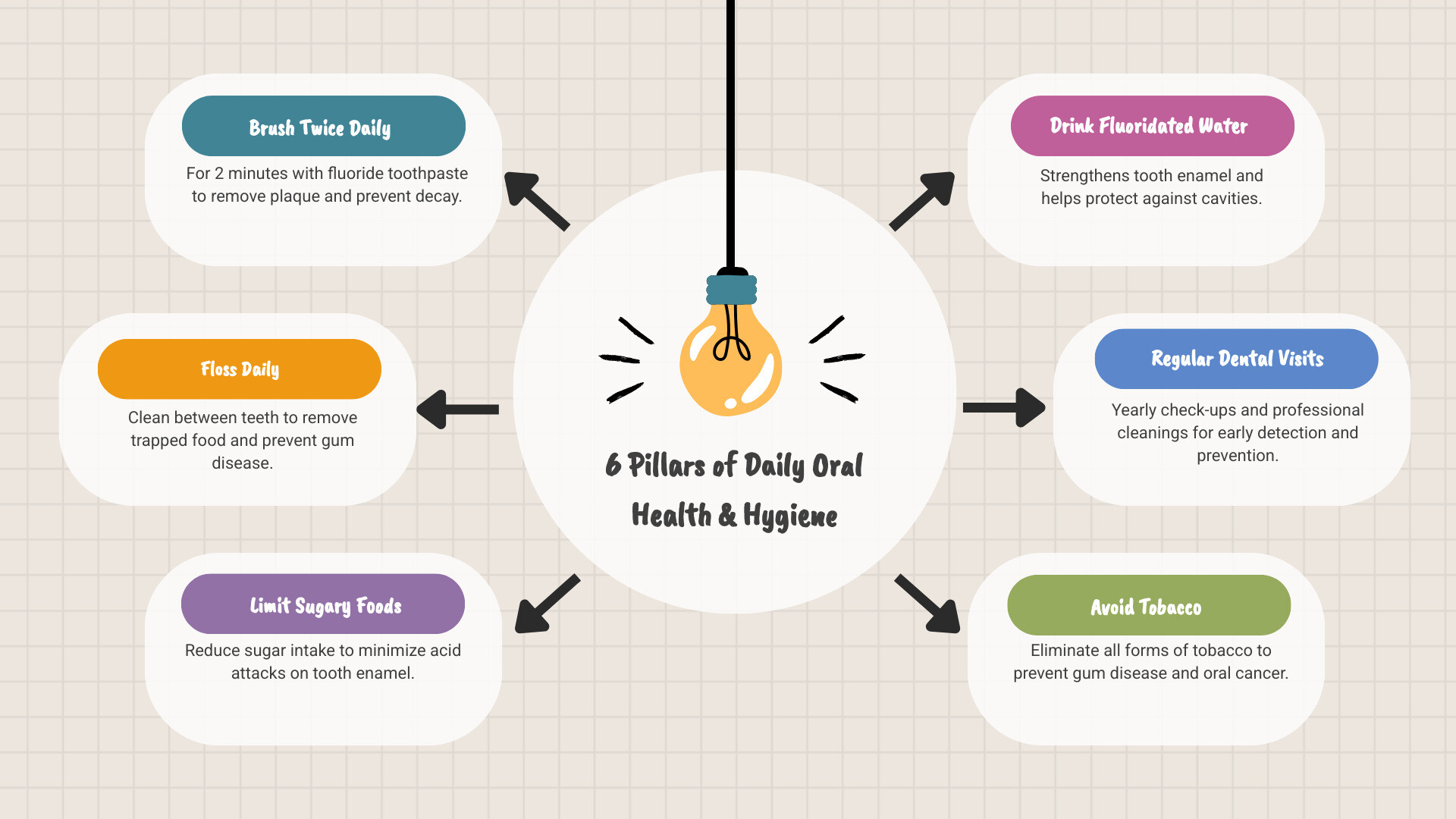
Here are the core daily habits that protect your oral health:
- Brush twice a day for two minutes with fluoride toothpaste
- Floss or use an interdental cleaner once daily
- Limit sugary foods and drinks throughout the day
- Drink fluoridated water when possible
- Visit your dentist at least once a year for a check-up and professional cleaning
- Avoid tobacco in any form
These six steps form the foundation of good oral health — and most take less than five minutes a day.
Yet despite how simple this sounds, oral diseases affect nearly 3.7 billion people worldwide. More than 80% of people will have had at least one cavity by age 34. And over 40% of adults report feeling pain in their mouth within the past year. That's not a small problem.
The good news? Most of these issues are largely preventable with the right daily habits and professional support.
The dentists at Advanced Smiles Marion bring advanced training and a deep commitment to continuing education in oral health and hygiene — so you and your family get guidance that's current, evidence-based, and tailored to your needs. Whether you're building better habits or addressing a long-overdue concern, this guide walks you through everything you need to know.
Terms related to oral health and hygiene:
Why Oral Health and Hygiene Matters for Your Whole Body
When we talk about oral health and hygiene, we aren't just talking about a white smile. We are talking about the health of your teeth, gums, and the entire oral-facial system. This system allows you to speak, smile, sigh, and—most importantly—eat the nutritious foods your body needs.
The numbers are staggering. According to the Global Burden of Disease, untreated dental caries (tooth decay) in permanent teeth is the most common health condition on the planet. Furthermore, severe periodontal diseases are estimated to affect more than 1 billion people worldwide. In the United States alone, roughly $46 billion in productivity is lost yearly due to untreated oral diseases.
It starts with plaque—a sticky, colorless film of bacteria that constantly forms on your teeth. When you eat sugars, the bacteria in plaque produce acids that attack your tooth enamel. If not cleaned away, this plaque hardens into tartar (calculus), which can only be removed by a professional. This progression leads to:
- Dental Caries (Cavities): Permanent damage to the hard surface of your teeth that develops into tiny openings or holes. MedlinePlus: Tooth Decay provides extensive resources on how these develop.
- Gingivitis: The earliest stage of gum disease. Your gums might look red or swollen and bleed when you brush. The good news? It’s reversible with better hygiene!
- Periodontitis: If gingivitis is ignored, it can progress to periodontitis, where the gums pull away from the teeth and the bone supporting the teeth is lost. This is a leading cause of tooth loss in adults.
The Global oral health resolution recently highlighted that oral health should be a global priority because it shares risk factors with other major diseases, like high sugar consumption and tobacco use. Total tooth loss (edentulism) affects nearly 23% of people aged 60 or older, but it doesn't have to be an inevitable part of aging.
The Daily Blueprint: Essential Cleaning Habits
Maintaining a healthy mouth is a marathon, not a sprint. It requires a consistent dental hygiene care routine that targets bacteria before they can do permanent damage.
Mastering Brushing for Optimal Oral Health and Hygiene
Brushing seems simple, but there is a specific "art" to it that ensures you actually remove the plaque.
- The 2/2 Rule: Brush for two minutes, twice a day. Most people think they brush for two minutes but actually average about 45 seconds. Try using a timer!
- The Angle Matters: Hold your toothbrush at a 45-degree angle toward the gumline. This is where plaque loves to hide.
- Circular Motions: Instead of scrubbing back and forth (which can actually damage your gums), use gentle, small circular motions.
- Don't Forget the Tongue: Your tongue is a carpet for bacteria. Give it a gentle brush to keep your breath fresh and reduce the bacterial load in your mouth.
- Fluoride is Your Friend: Use a fluoride toothpaste. Fluoride helps rebuild (remineralize) weakened tooth enamel and protects teeth from the acid produced by bacteria.
For more foundational tips, the CDC Oral Health Basics page offers a wealth of information on how to care for your teeth at any age. You can also explore our guide on 10 ways to take care of your teeth or our broader tips for good oral health.
Flossing and Interdental Care
If you only brush, you are leaving about 35% of your tooth surfaces uncleaned. Plaque thrives in the tight spaces between teeth where toothbrush bristles cannot reach.
- The C-Shape Technique: Don't just "snap" the floss in and out. Wrap the floss in a "C" shape around the side of the tooth and gently slide it under the gumline.
- Water Flossers: If traditional string floss feels like a chore or if you have dexterity issues like arthritis, a water flosser is a fantastic alternative.
- Interdental Brushes: These tiny brushes are often more effective than floss for people with larger gaps between their teeth or those with braces.
According to NHANES data, adults who frequently use interdental cleaning devices are significantly less likely to suffer from periodontitis. If you are struggling with bleeding or sore gums, check out MedlinePlus: Gum Disease to understand why interdental care is so vital.
Connecting the Dots: Systemic Health and Your Mouth
We often say the mouth is a window into the rest of the body. Because the mouth is the entry point to your digestive and respiratory tracts, oral bacteria can sometimes lead to disease in other parts of the body.
- Diabetes: This is a two-way street. People with diabetes are more susceptible to gum disease, and severe gum disease can actually make it harder to control blood sugar levels.
- Heart Disease: While the link is still being researched, some studies suggest that heart disease, clogged arteries, and stroke might be linked to the inflammation and infections that oral bacteria can cause.
- Pregnancy Complications: Periodontitis has been linked to premature birth and low birth weight. Hormonal changes during pregnancy can also make "pregnancy gingivitis" more common. If you’re expecting, check out the Oral health and pregnancy resources from the Office on Women’s Health.
- Pneumonia: Certain bacteria in your mouth can be pulled into your lungs, causing pneumonia and other respiratory diseases.
At Advanced Smiles Marion, we focus on dental hygiene and wellness because we know that a healthy mouth supports a healthy heart and a healthy life.
Professional Care and Advanced Treatments
While daily habits are the foundation, professional intervention is the "structural support" of your oral health and hygiene. Even the best brushers can miss spots, and once plaque hardens into tartar, only a dental professional can remove it.
The Role of Professional Oral Health and Hygiene Check-ups
During a routine visit at Advanced Smiles Marion, we do more than just "scrape" your teeth. We perform a comprehensive exam that includes oral cancer screenings, gum health assessments, and a review of your oral health tips for adults.
Beyond cleanings, our highly educated and involved dental team offers a full suite of advanced services to restore and enhance your smile:
- Invisalign: Straighten your teeth discreetly, which also makes them easier to clean!
- Teeth Whitening & Veneers: For those looking to brighten or perfect their smile's appearance.
- Tooth Bonding & Crowns: To repair chips or strengthen weakened teeth.
- Endosteal Dental Implants: A permanent solution for missing teeth. In our practice, a dental implant for a single tooth averages about $4500.
- Digital Dentures: Precise, comfortable replacements for multiple missing teeth.
- Botox: Used not just for aesthetics, but also as a therapeutic treatment for jaw tension.
We believe in creating lifelong dental habits through education and personalized care.
Advanced Solutions for High-Risk Groups
We understand that some patients face higher risks due to genetics, age, or chronic conditions. That’s why we feature cutting-edge technology like laser treatments. These lasers are incredibly effective for:
- Periodontal Disease Treatment: Targeting bacteria deep in gum pockets without invasive surgery.
- TMJ Pain Relief: Using light energy to reduce inflammation in the jaw joint.
- Canker Sore Healing: Significantly reducing pain and speeding up recovery time.
For those at high risk for cavities, our Dental Wellness Plan now includes two fluoride treatments per year. Fluoride isn't just for kids; it's a vital tool for adults with receding gums or dry mouth. We align our goals with the Healthy People 2030: Oral Health objectives, focusing on prevention and early intervention.
Frequently Asked Questions about Dental Care
How often should I replace my toothbrush?
You should replace your toothbrush (or electric toothbrush head) every 3 to 4 months, or sooner if the bristles look frayed or "worn out." A worn toothbrush won't clean your teeth effectively. It’s also a good idea to replace it after you’ve had a cold or the flu to avoid reintroducing germs.
What is the ADA Seal of Acceptance?
When you see the ADA Seal of Acceptance on a box of toothpaste or a bottle of mouthwash, it means the American Dental Association has independently evaluated the product for safety and efficacy. It’s a great "shorthand" to ensure you are buying a product that actually does what it claims to do.
How can I manage dry mouth caused by medication?
Dry mouth (xerostomia) is a common side effect of hundreds of medications, including those for blood pressure and depression. Saliva is vital for neutralizing acids and washing away food particles. To manage it, drink plenty of water, chew sugarless gum, and talk to us about fluoride rinses or artificial saliva products.
Conclusion
Your journey to better oral health and hygiene doesn't have to be overwhelming. By combining simple daily habits—like the 2/2 brushing rule and flossing—with professional care, you can protect your smile for a lifetime.
At Advanced Smiles Marion, our dentists are deeply involved in the Marion, OH community and are committed to providing world-class, affordable dental solutions. We know that many people lack dental insurance, which is why we offer our Dental Wellness Plan. This plan allows individuals and families to receive their necessary yearly care, including cleanings, exams, and two fluoride treatments, at a discounted price.
If you are experiencing a dental crisis, we provide emergency dental treatments and are usually able to see patients on the same day. Don't let a small ache become a big problem.
Whether you need a routine check-up, a consultation for dental implants, or relief from TMJ pain, we are here to help. Schedule your family dentistry visit today and let us help you achieve a healthy, confident smile!
Get in touch
Have any questions? Want to learn more?


