
The Spotless Smile: How to Banish White Marks from Your Teeth

Understanding White Spots on Teeth: The First Step to a Spotless Smile
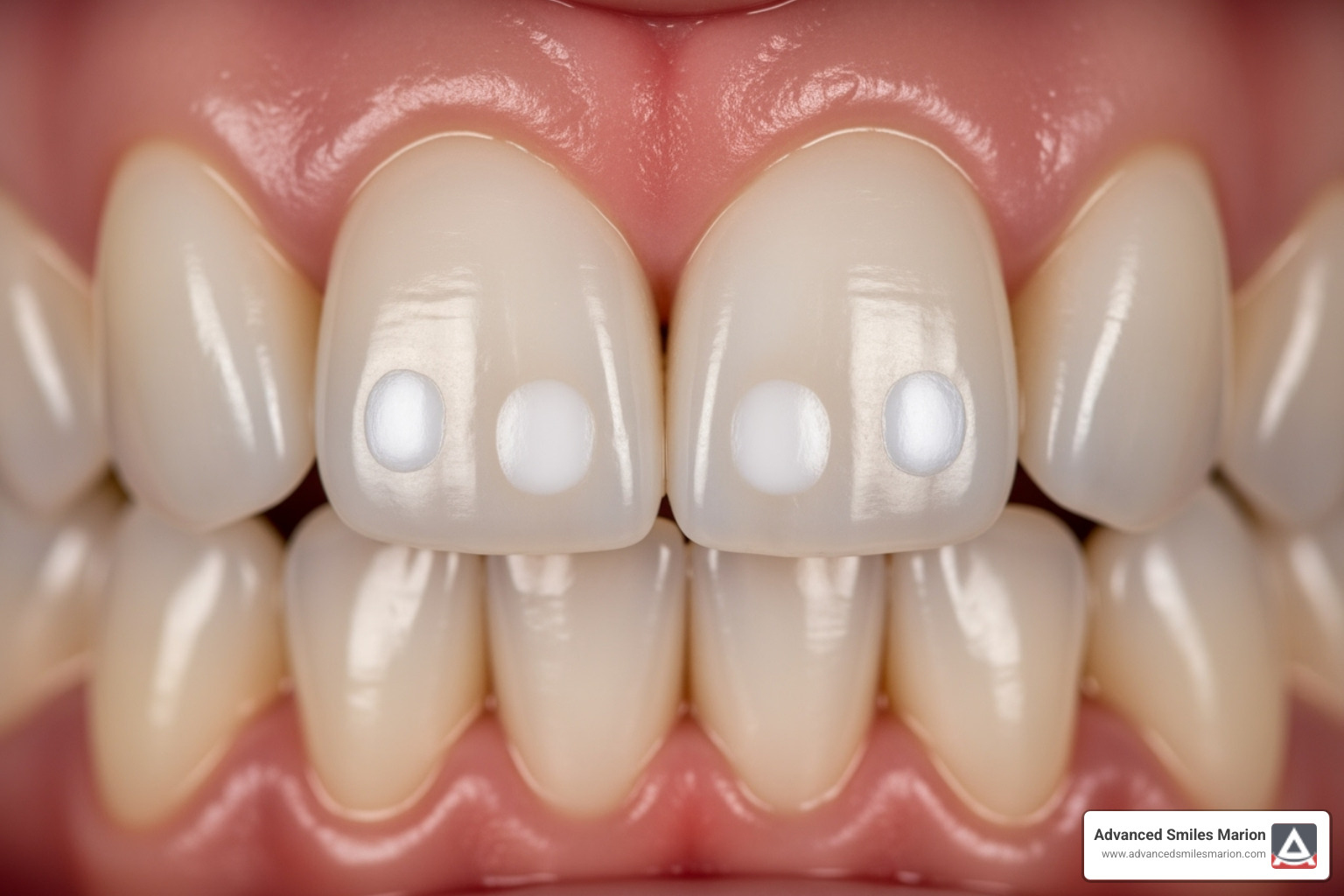
Learning how to remove white spots on teeth starts with understanding what these chalky, discolored areas actually are. White spots on teeth aren't just a cosmetic concern - they're often the first visible sign of early tooth decay and mineral loss in your enamel.
Quick Solutions for White Spots on Teeth:
- Professional microabrasion - Removes thin enamel layer containing spots
- Resin infiltration - Fills porous enamel with tooth-colored material
- Tooth bonding - Covers spots with composite resin
- Dental veneers - Provides complete coverage for severe cases
- Professional fluoride treatments - Helps remineralize early-stage spots
White spot lesions are surprisingly common, affecting millions of people worldwide. These spots appear white because the demineralized enamel reflects light differently than healthy tooth structure. The good news? Many white spots are reversible, especially when caught early.
Unlike surface stains from coffee or wine, white spots form from inside the tooth when minerals like calcium and phosphorus are stripped away by acid-producing bacteria. This process, called demineralization, is the same process that leads to cavities - but white spots represent the earliest, most treatable stage.
At Advanced Smiles Marion, our experienced dental team understands how to remove white spots on teeth using the latest minimally invasive techniques and advanced technology. With decades of combined experience treating cosmetic dental concerns, our dentists stay current with continuing education to provide the most effective treatments for families throughout Marion, OH.
Decoding White Spots: What They Are and Why They Appear
Understanding how to remove white spots on teeth begins with knowing exactly what you're dealing with. While we're all familiar with surface stains from coffee or red wine, white spots are completely different creatures - and they're much more common than you might think.
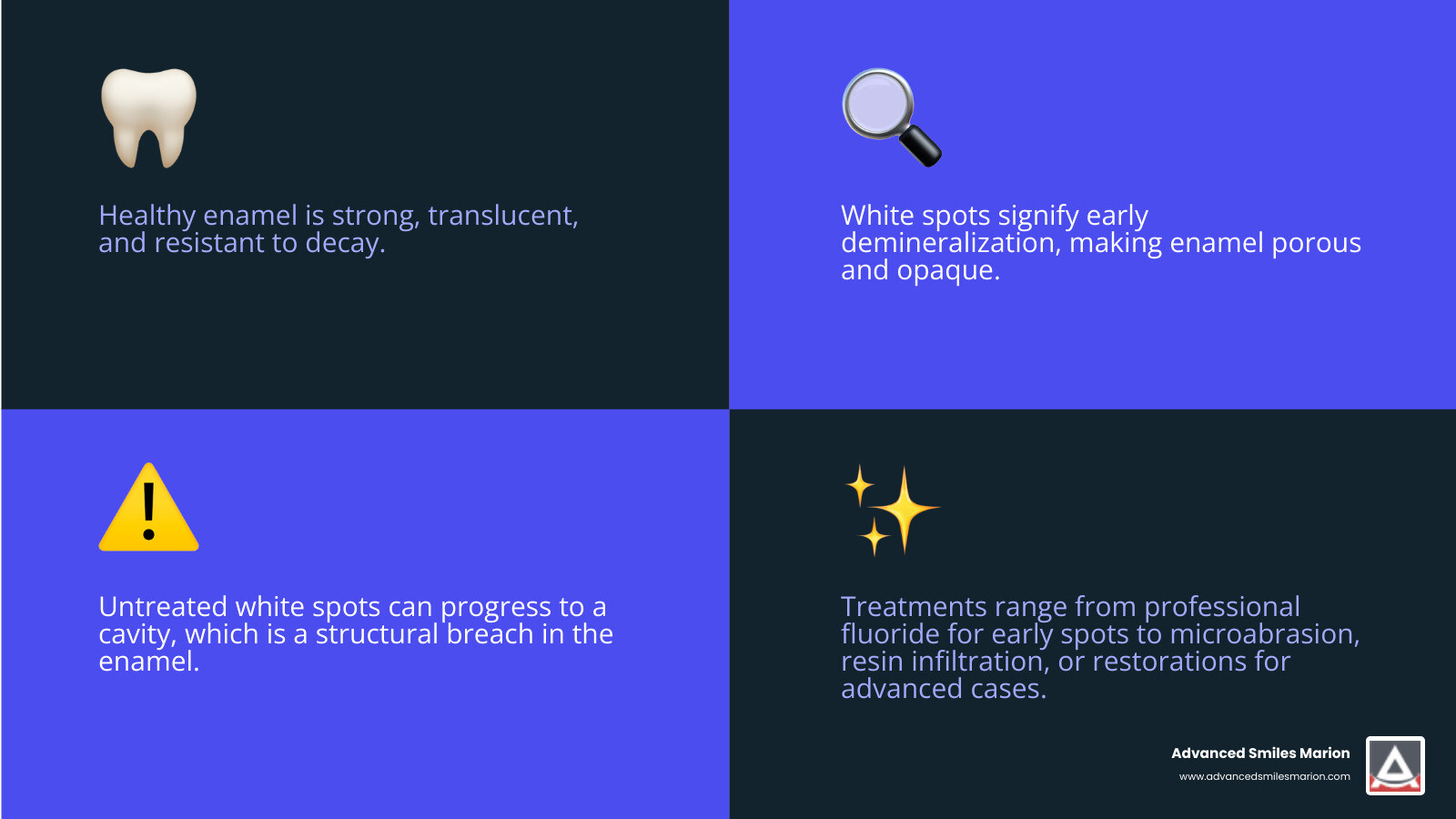
White spots on teeth aren't just surface discoloration that you can brush away. These chalky, opaque areas are actually signs of demineralization - a process where your tooth enamel loses essential minerals like calcium and phosphorus. Think of your enamel as a strong, translucent shield protecting your teeth. When minerals are stripped away, that shield becomes porous and cloudy, reflecting light differently than the healthy enamel around it.
This change in enamel structure is what creates those distinctive white, sometimes chalky-looking spots. Unlike stains that sit on top of your teeth, white spots form from within the enamel itself. The good news? They're often the earliest sign of tooth decay, which means there's still time to take action before a cavity forms.
Dental Fluorosis: A Matter of Balance
One of the most common culprits behind white spots is dental fluorosis - and it's all about timing and balance. Fluoride is absolutely essential for strong, healthy teeth, but during tooth development (typically ages 1-8), too much of this good thing can cause problems.
When children consume excessive fluoride during these critical years, it interferes with the cells that form enamel. The result? Teeth that develop with a more porous, discolored appearance. These fluorosis spots often appear as symmetrical white streaks or patches on newly erupted permanent teeth, sometimes with a distinctive chalky texture.
The tricky part about fluorosis is that it can come from multiple sources - tap water, certain foods, and yes, even swallowed toothpaste. That's why we recommend using only a rice-grain sized amount of toothpaste for children under 3, and a pea-sized amount for kids over 3. Supervising brushing time helps ensure they're not getting more fluoride than their developing teeth can handle.
You can learn more about the risks of too much fluoride and how to find the right balance for your family.
Enamel Hypoplasia: When Enamel is Underdeveloped
Sometimes white spots aren't about too much of something, but rather not enough. Enamel hypoplasia occurs when tooth enamel doesn't develop properly, resulting in thinner, less mineralized enamel that appears white or translucent.
This condition can stem from various factors during tooth development: hereditary conditions, nutritional deficiencies, certain medications during pregnancy, or trauma to baby teeth that affects the permanent teeth developing underneath. Scientific research on enamel hypoplasia shows how these disruptions during the enamel formation process can lead to permanent structural changes.
The challenge with hypoplasia is that these teeth are often more susceptible to decay and sensitivity because the protective enamel layer is compromised from the start. If you've had white spots since your adult teeth first appeared, hypoplasia could be the underlying cause. For those looking to strengthen compromised enamel, we have more information about fixing tooth enamel.
Demineralization: The First Stage of a Cavity
Here's where things get really interesting - and where most adult white spots come from. Demineralization is literally the first stage of cavity formation, but it's also the most treatable stage.
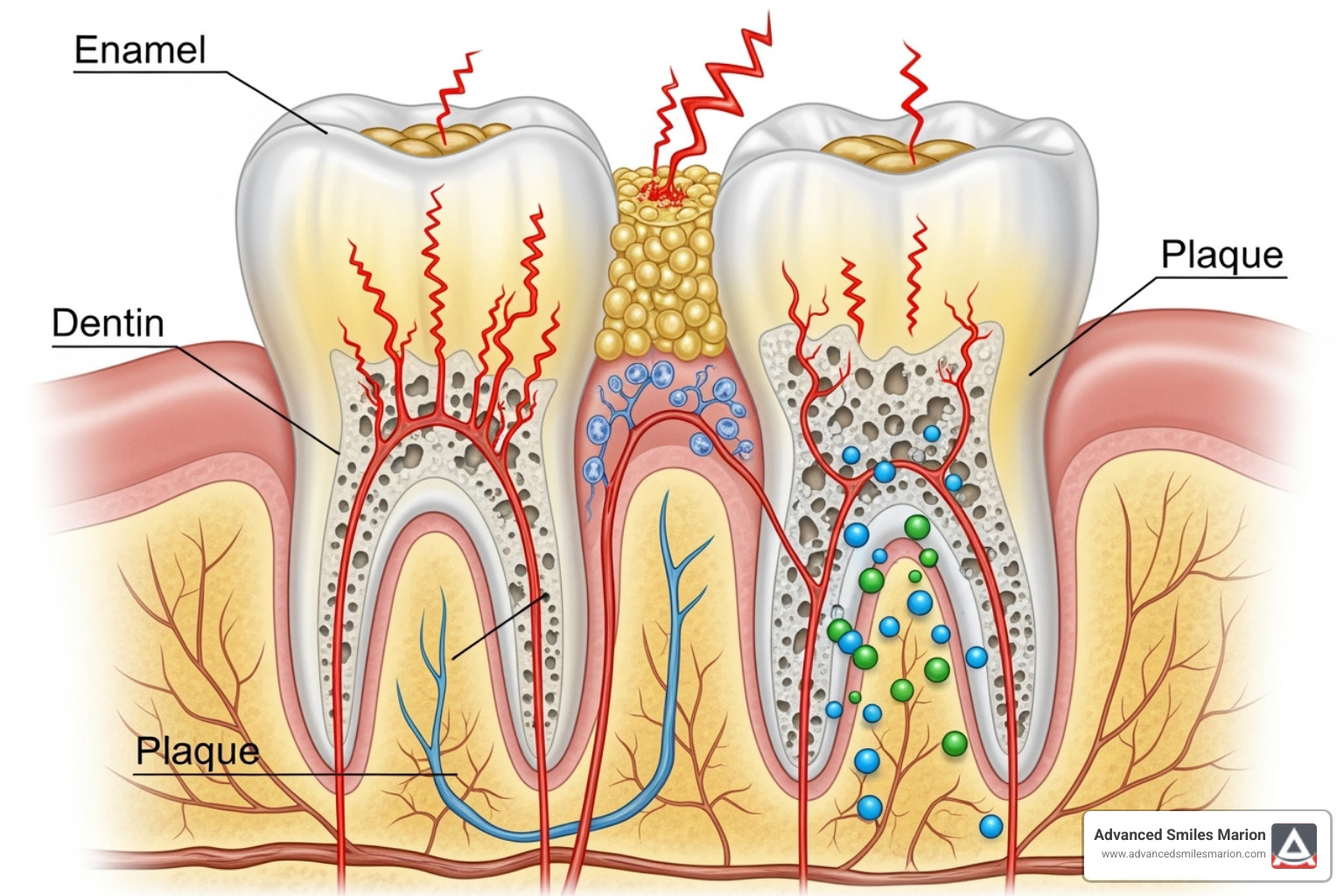
The process starts when plaque bacteria feast on sugars and carbohydrates from your diet, producing acids as waste products. These acids attack your enamel, gradually dissolving away calcium and phosphorus. Areas that get repeatedly exposed to these acids - especially spots that are hard to clean thoroughly - begin to lose their mineral content.
Braces wearers know this struggle all too well. While braces themselves don't cause white spots, they create countless nooks and crannies where plaque can hide. This often leads to decalcification spots appearing around bracket areas once the braces come off.
Other factors that contribute to demineralization include sugary and acidic foods and drinks (think sodas, sports drinks, and frequent snacking), poor oral hygiene, and conditions like dry mouth that reduce saliva's natural protective effects.
The silver lining? Unlike fluorosis or hypoplasia, demineralization-related white spots can often be reversed through remineralization when caught early. This makes professional evaluation crucial for determining the best approach to treatment.
Proactive Protection: How to Prevent White Spots
The best way to learn how to remove white spots on teeth is to prevent them from forming in the first place! Think of it like maintaining your car - a little regular care goes a long way toward avoiding bigger problems down the road. The good news is that most white spots are completely preventable with the right approach to oral care and lifestyle choices.
At Advanced Smiles Marion, we believe in empowering our patients with practical knowledge. Our experienced dental team has seen countless cases where simple preventive measures could have saved patients from needing more complex treatments later. Let's explore how you can protect your smile proactively.
The Crucial Role of Oral Hygiene and Diet
Your daily habits are your strongest defense against white spots. It really comes down to two main areas: keeping your teeth clean and being mindful of what you eat and drink.
Brushing twice daily with fluoride toothpaste and flossing once daily might sound basic, but these habits are incredibly powerful. They remove the plaque that produces enamel-damaging acids. Think of plaque as tiny factories working around the clock to create the acids that cause demineralization - your toothbrush and floss are the cleanup crew that shuts down those factories.
Your diet plays an equally important role in prevention. Sugary and acidic foods create the perfect storm for white spot formation. Sodas, sports drinks, citrus fruits, hard candies, and processed snacks all feed the bacteria that produce enamel-attacking acids.
But here's the encouraging part - you don't have to give up everything you enjoy! Instead, focus on adding more enamel-strengthening foods to your diet. Dairy products like milk, cheese, and yogurt are packed with calcium and phosphates that actually help rebuild your enamel. Leafy greens such as spinach and kale provide essential vitamins and minerals for oral health.
Crunchy fruits and vegetables like apples, carrots, and celery do double duty - they increase saliva production (nature's own mouth rinse) while providing nutrients. And never underestimate the power of drinking plenty of water, especially after meals, to rinse away food particles and neutralize acids.
Regular professional cleanings are your secret weapon against white spots. Our skilled dental hygienists can remove plaque and tartar buildup in those hard-to-reach areas that even the best brushing and flossing can miss. For families without dental insurance, our Dental Wellness Plan makes preventive care affordable with discounted yearly dental care and two fluoride treatments annually. You can learn more about comprehensive oral care here: More info on dental hygiene care.
Managing Fluoride for a Healthy Smile
Here's where things get interesting - fluoride is both a hero and a potential villain in the white spot story. It's all about getting the balance just right, especially for children whose teeth are still developing.
Appropriate toothpaste amounts make all the difference. For toddlers under 3, use just a rice-grain-sized smear of fluoride toothpaste. For children over 3, a pea-sized amount is perfect. Always supervise young children during brushing to prevent them from swallowing excess toothpaste - most kids think toothpaste tastes pretty good!
If your family uses well water, we recommend testing it annually for fluoride levels. Natural fluoride concentrations can vary significantly, and knowing your levels helps you make informed decisions about additional fluoride sources. For families with babies who drink formula, using fluoride-free water can help prevent excess fluoride intake during those critical tooth development years.
Professional fluoride applications during your regular check-ups at Advanced Smiles Marion offer targeted protection. These concentrated treatments can actually help remineralize early white spots while strengthening your enamel against future acid attacks. Our dental team carefully evaluates each patient's individual needs to determine the best fluoride management approach.
The key is working with professionals who understand the delicate balance between too little and too much fluoride. Our dentists stay current with the latest research and guidelines to ensure every family member gets exactly the right amount of fluoride protection for their age and risk factors.
Professional Solutions: How to Remove White Spots on Teeth
When you notice white spots on your teeth, the good news is that modern dentistry offers several excellent solutions. At Advanced Smiles Marion, we believe every smile deserves personalized attention, which is why our experienced team starts with a thorough professional diagnosis to determine exactly what's causing your white spots and create a treatment plan that's just right for you.
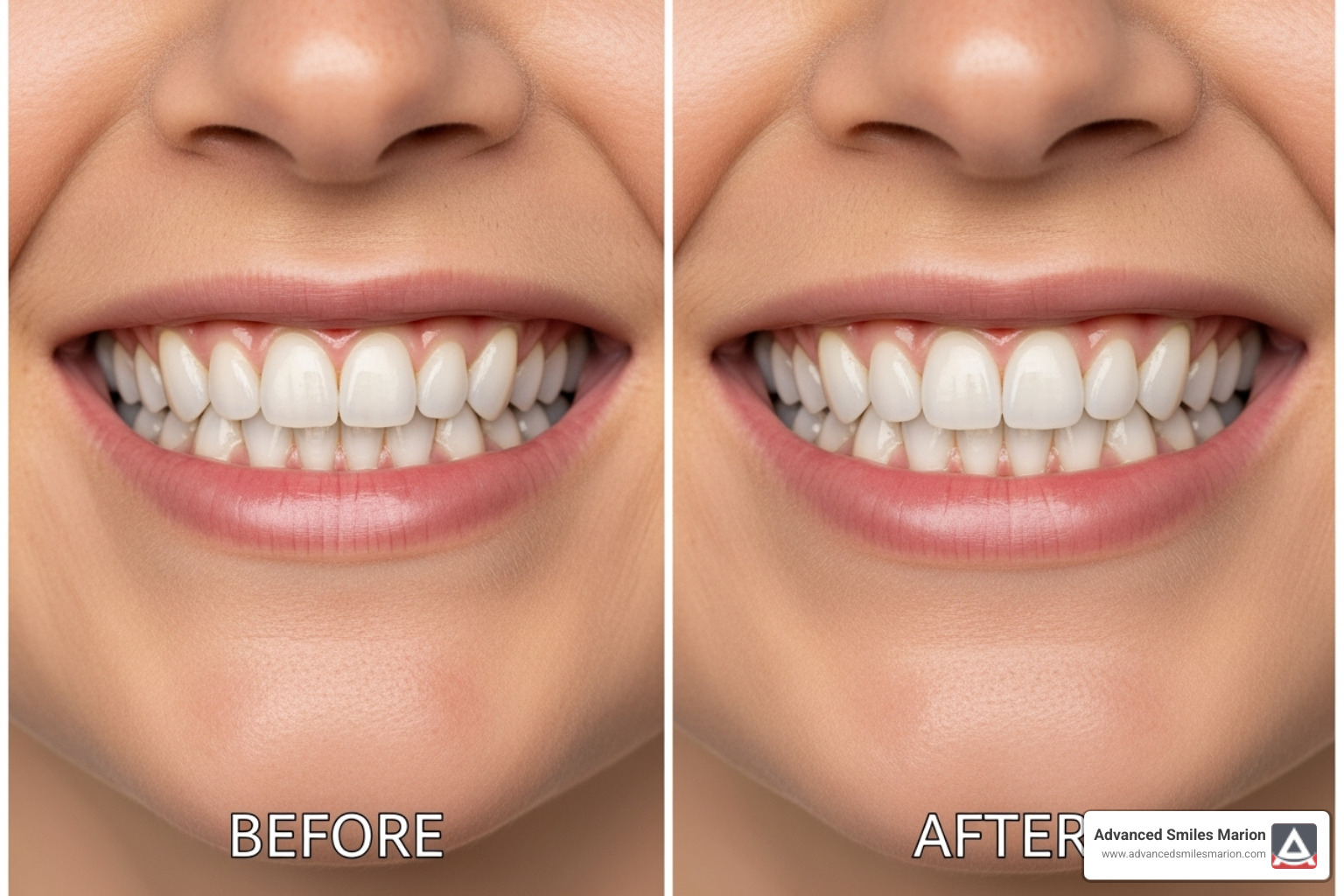
Our dentists stay current with continuing education and the latest advances in cosmetic dentistry, ensuring you receive the most effective treatments available. Using advanced dental technology, we can provide precise, comfortable care that delivers beautiful results. The key is understanding that different types of white spots require different approaches - what works perfectly for one patient might not be the best choice for another.
Can Teeth Whitening Alone Fix White Spots?
Here's a question we hear almost daily: "Will teeth whitening get rid of my white spots?" It's a great question, and the answer might surprise you. While professional teeth whitening can create a brighter, more radiant smile overall, it doesn't directly address the mineral loss that creates white spots in the first place.
Think of it this way - when you whiten your teeth, you're lightening the surrounding healthy enamel. Sometimes this can actually make white spots appear more noticeable because it increases the contrast between the demineralized areas and the rest of your tooth. The white spots often react differently to whitening agents than healthy enamel does.
That doesn't mean whitening isn't useful when learning how to remove white spots on teeth - it can absolutely be part of a comprehensive treatment plan. We often combine whitening with other treatments to create a beautifully uniform smile. The key is using it strategically rather than as a standalone solution. You can learn more about our professional whitening options here: More info about teeth whitening.
Minimally Invasive Treatments: How to Remove White Spots on Teeth
At Advanced Smiles Marion, we love helping patients achieve beautiful smiles while preserving as much of their natural tooth structure as possible. Our minimally invasive treatments are often the perfect solution for white spots, offering excellent results with maximum comfort.
Microabrasion is one technique that works wonderfully for certain types of white spots. During this procedure, we use a mild abrasive combined with a gentle acid to carefully remove just the thinnest layer of enamel - we're talking about removing less than the thickness of a human hair! This technique effectively blends the white spots with the surrounding healthy enamel. While you might experience some temporary sensitivity afterward, most patients find the results well worth it.
Resin infiltration represents one of the most exciting advances in how to remove white spots on teeth. This innovative treatment works by filling the porous, demineralized enamel with a special tooth-colored resin that has optical properties similar to healthy enamel. The result? The white spot essentially disappears because it now reflects light just like the rest of your tooth.
The process is remarkably comfortable - no drilling, no needles, and it typically takes just 15-30 minutes per tooth. We prepare the tooth surface, apply the liquid resin which penetrates deep into the enamel's tiny pores, then cure it with a special light. It's like giving your tooth a chance to heal itself while making it stronger and more beautiful at the same time.
For early-stage white spots caused by demineralization, professional fluoride treatments can sometimes encourage your teeth to remineralize naturally. We use highly concentrated fluoride applications that give your enamel the extra boost it needs to repair itself. Sometimes we'll lightly etch the area first to help the fluoride penetrate more effectively, essentially opening the door for healing minerals to get where they need to go.
Cosmetic Restorations: How to Remove White Spots on Teeth
When white spots are more extensive or haven't responded well to conservative treatments, our cosmetic restoration options can create dramatic, lasting improvements. These treatments are perfect for patients who want to address not just the white spots but also improve their overall smile appearance.
Tooth bonding uses a tooth-colored composite resin that we carefully sculpt directly onto your tooth surface. Our skilled dentists are true artists when it comes to bonding - we can match the exact shade of your natural teeth and create a seamless blend that makes white spots completely disappear. After applying the composite resin, we harden it with a special light and polish it to perfection. The result is a natural-looking restoration that covers imperfections beautifully.
Dental veneers represent the gold standard for comprehensive smile makeovers. These thin, custom-made shells are crafted to your exact specifications and bonded to the front surface of your teeth. Veneers don't just cover white spots - they can transform the entire appearance of your smile, addressing color, shape, and even minor alignment issues all at once.
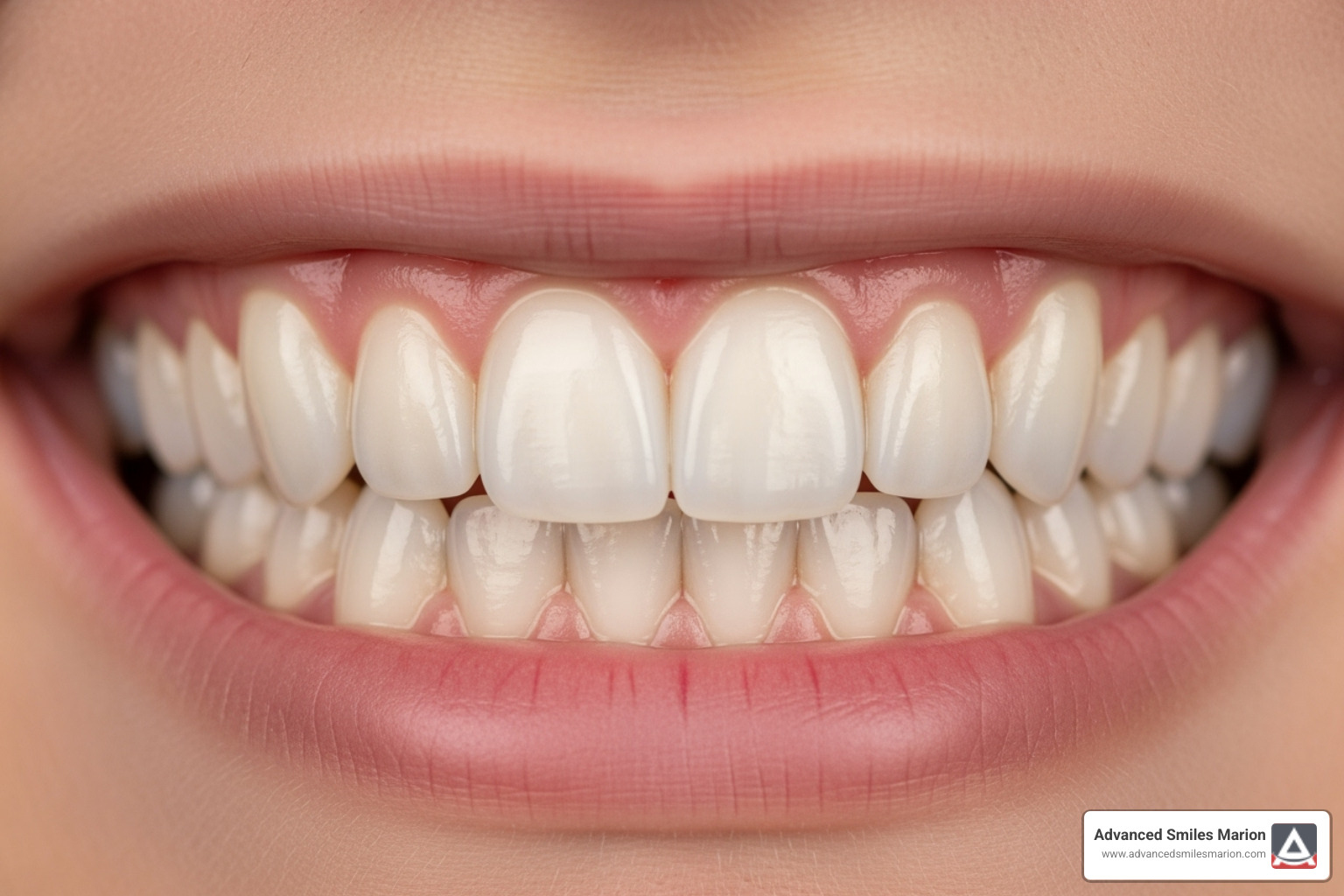
What we love about veneers is their durability and natural appearance. Each veneer is custom-matched to your desired shade and carefully designed to complement your facial features. While they require more planning than bonding, many patients find that veneers give them the confidence-boosting smile they've always dreamed of. You can explore more about this option here: More info about veneers.
Our team understands that choosing the right treatment can feel overwhelming. That's why we take time to explain each option thoroughly, discussing the benefits and considerations so you can make the decision that feels right for your smile goals and lifestyle. There's no one-size-fits-all solution - the best treatment is the one that's perfectly custom to you.
Frequently Asked Questions about White Spots
We understand that finding white spots on your teeth can raise many questions and concerns. At Advanced Smiles Marion, our experienced dental team fields these questions daily, and we're here to provide you with clear, honest answers. Let's address the most common questions we hear from patients in Marion, OH.
Are white spots on teeth permanent?
The permanency of white spots really depends on what caused them in the first place. If you're dealing with white spots from early demineralization - those caused by plaque buildup or poor oral hygiene - there's actually good news! When caught early, these spots can often be reversed through a process called remineralization.
With excellent oral hygiene, professional fluoride treatments, and the right care, your enamel can reabsorb those lost minerals and strengthen itself. Many patients are amazed to see their white spots fade or even disappear completely with this approach.
However, white spots caused by fluorosis or enamel hypoplasia are permanent in the sense that the enamel structure itself was formed differently during development. Think of it like a birthmark - it's part of how the tooth developed. But here's the encouraging part: even though these spots won't disappear naturally, they can be effectively treated with cosmetic procedures.
Our dentists at Advanced Smiles Marion have extensive experience with treatments like microabrasion, resin infiltration, bonding, and veneers that can make these spots virtually invisible. Early intervention is always key - the sooner you address white spots, the more treatment options you'll have and the better your results will be.
What is the difference between white spots and tooth stains?
This is one of the most common sources of confusion we see! While both affect the appearance of your teeth, they're actually quite different problems that require different solutions.
White spots are internal issues - they represent actual mineral loss within the enamel layer itself. Think of them as tiny areas where your tooth structure has become porous and weak. They're essentially a structural problem with the tooth, whether from early decay, fluorosis, or developmental issues.
Tooth stains, on the other hand, are surface discolorations that sit on top of your enamel. These come from external sources like coffee, tea, red wine, berries, or tobacco use. Stains are more like paint on a wall - they can often be cleaned or whitened away because they haven't actually changed the tooth's structure.
This difference is why traditional teeth whitening works great for stains but doesn't directly address white spots. In fact, whitening can sometimes make white spots more noticeable by brightening the healthy enamel around them! Understanding this distinction helps our team recommend the right treatment approach for your specific situation. For more comprehensive information on addressing various types of tooth discoloration, check out our resource on removing tooth stains.
When should I see a dentist about white spots?
The short answer? As soon as you notice them! While white spots aren't a dental emergency, they are your teeth's way of sending you an early warning signal. At Advanced Smiles Marion, we always tell our patients that it's much easier to treat white spots when they're caught early.
You should definitely schedule an appointment if you notice new white spots appearing - this could indicate active demineralization that we can stop and reverse. If existing spots seem to be changing in size, shape, or texture, that's another important sign that shouldn't be ignored.
Tooth sensitivity or pain associated with white spots is particularly concerning, as it might indicate the spots are progressing toward actual cavities. But even if you're not experiencing any discomfort, it's worth having them evaluated if they're affecting your confidence in your smile.
Our experienced dental team specializes in diagnosing the exact cause of white spots and creating personalized treatment plans. We use advanced diagnostic tools to determine whether your spots are from demineralization, fluorosis, or enamel hypoplasia - and that diagnosis guides us toward the most effective treatment approach.
The best part? We often see patients the same day for concerns like this, so you don't have to wait and worry. Professional diagnosis is crucial because what looks like a simple cosmetic issue might actually be an early sign of decay that we can address before it becomes a bigger problem.
Addressing white spots isn't just about aesthetics - it's about maintaining the long-term health of your teeth and preventing more serious issues down the road.
Achieve Your Spotless Smile in Marion, OH
White spots on teeth might feel overwhelming when you first notice them, but here's the encouraging truth: they're absolutely treatable! Whether your white spots come from fluorosis during childhood, enamel that didn't develop quite right, or those sneaky early signs of decay, understanding what's happening is your first step toward a solution.
The path to how to remove white spots on teeth isn't one-size-fits-all. Some people find success with improved oral hygiene and professional fluoride treatments that help their teeth rebuild those lost minerals. Others benefit from our advanced minimally invasive treatments like resin infiltration or microabrasion. And for those wanting a complete smile makeover, cosmetic options like bonding and veneers can create the flawless look you've always dreamed of.
At Advanced Smiles Marion, we believe every person deserves to smile with complete confidence. Our team of highly educated and involved dentists stays current with the latest advances in dental care, bringing you cutting-edge technology and proven techniques right here in Marion, OH. We don't just treat white spots - we create personalized treatment plans that fit your unique situation, your budget, and your smile goals.
What sets us apart? We're featuring innovative laser treatments for TMJ pain, canker sore healing, and periodontal disease treatment, showing our commitment to bringing you the most advanced care available. Whether you need the gentle precision of resin infiltration to blend away early white spots or the dramatic change that veneers can provide, we have the expertise and technology to deliver exceptional results.
We understand that dental concerns can feel urgent, which is why we offer emergency dental treatments and can often see patients the same day. No one should have to wait when they're worried about their smile or experiencing discomfort.
Don't let white spots hold back your confidence any longer. Schedule a consultation with our experienced dental team, and let's discuss your options. Together, we'll develop a treatment plan that addresses your specific concerns and helps you achieve the healthy, radiant smile you deserve.
Ready to take the next step? Learn more about our advanced teeth whitening solutions and find how we can help you achieve that truly spotless smile you've been wanting.

Panel 1: Marion's Origins
This opening scene pays homage to Marion's unspoiled beginnings. Earthy colors beautifully depict a cardinal, curious and forward-looking, amidst dense woods – a nod to the land before human touch.
Get in touch
Have any questions? Want to learn more?


