
Your Root Canal Timeline: A Guide to Procedure Duration


Understanding Your Root Canal Time Commitment
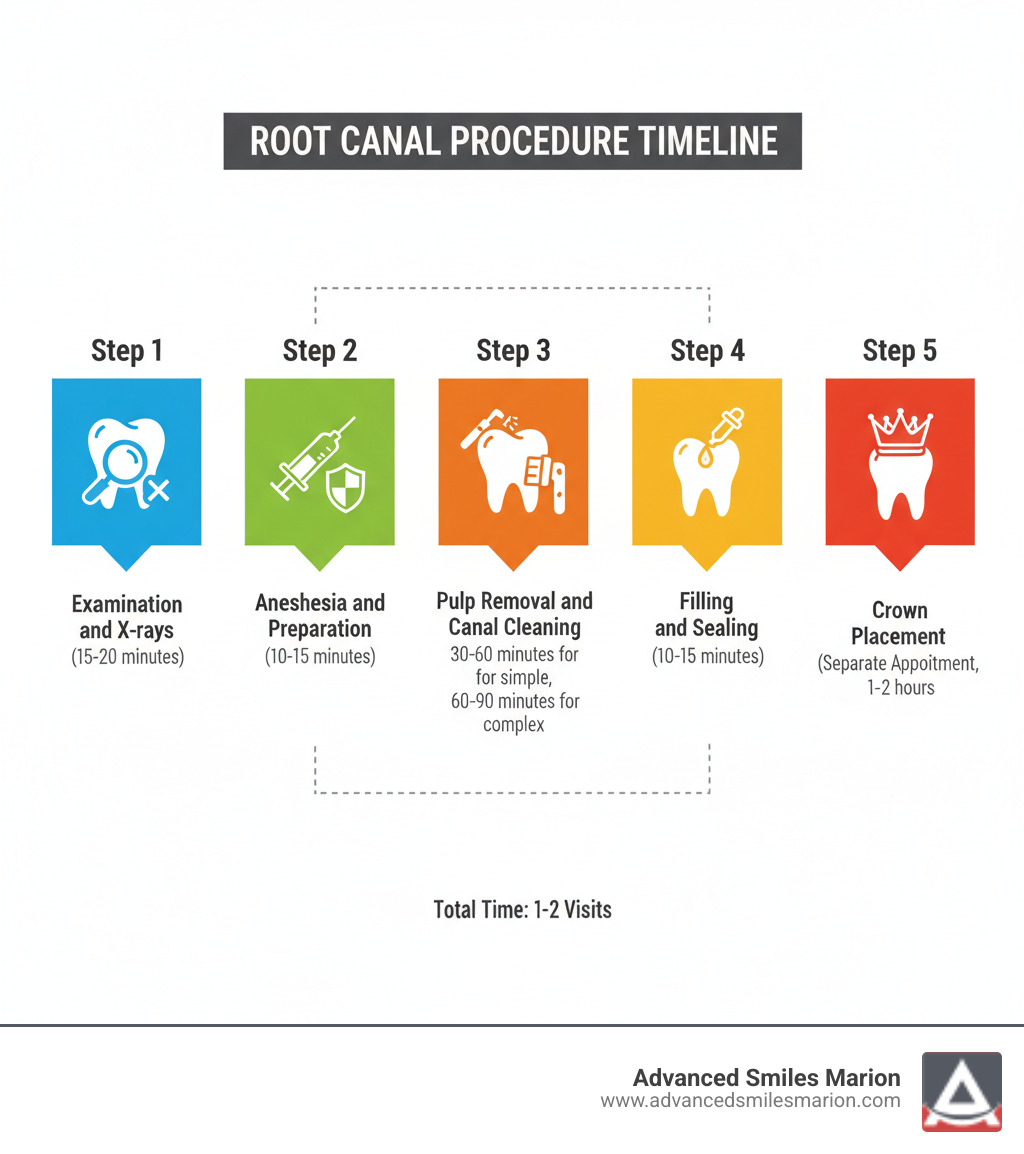
How long root canal procedures take is one of the most common questions patients ask when facing this treatment. Here's what you need to know:
Quick Answer: Root Canal Duration
- Simple root canal: 30-60 minutes for single-canal teeth (front teeth)
- Average appointment: 60-90 minutes including setup and recovery time
- Complex cases: 90 minutes to 2 hours for molars with multiple canals
- Total visits: Usually 1-2 appointments, depending on infection severity
If you've been told you need a root canal, it's natural to wonder about the time commitment. Will you need multiple days off work? How long will you be in the dental chair? These are practical concerns for busy families balancing work schedules, school pickups, and daily responsibilities.
The good news is that root canal procedures have come a long way. Modern techniques and technology have made them faster and more comfortable than ever before.
At Advanced Smiles Marion, our experienced dental team has performed countless root canal procedures using advanced technology and proven techniques. Understanding how long root canal treatment takes helps our patients plan their schedules and approach the procedure with confidence rather than anxiety. Our dentists stay current with the latest endodontic advances to ensure efficient, effective treatment that respects your valuable time.
Your Guide to the Root Canal Process
When you first hear you need a root canal, it can feel overwhelming. But understanding what actually happens during the procedure can help ease those worries and give you a clear picture of what to expect.
Think of a root canal as a rescue mission for your tooth. Your tooth has different layers, and at its center is the pulp—a soft tissue containing nerves and blood vessels that keep your tooth alive and healthy. When this pulp becomes infected due to deep decay, a cracked tooth, or repeated dental procedures, it causes pain and can threaten the entire tooth.
That's where a root canal comes in. This procedure removes the infected pulp, cleans out the inside of your tooth, and seals it to prevent future problems. It's not about causing pain—it's about relieving the pain you're already experiencing and saving your natural tooth in the process.
The numbers tell an important story: studies show that 96% of Canadians have had cavities at some point in their lives. When cavities go untreated, they can deepen and reach the pulp, leading to infection and the need for root canal treatment. This is why catching tooth decay early through regular checkups is so important.
So how long root canal treatment takes depends on catching problems early and addressing them before they become more complex. The good news? Modern root canal therapy is highly successful and much more comfortable than its outdated reputation suggests.
If you're wondering whether you might need this procedure, check out our guide on How Do You Know If You Need a Root Canal to learn about the warning signs.
At Advanced Smiles Marion, our experienced dental team approaches each root canal with precision and care. We use advanced technology to make the process as efficient and comfortable as possible, because we know your time and comfort matter. The goal is always the same: get you out of pain and back to your normal life with your natural tooth intact.
What is a Root Canal and Why is it Necessary?
Think of your tooth as having layers, like an onion. The hard outer shell is your enamel, then there's a layer called dentin underneath, and right in the center is the pulp—the soft inner chamber where all the living tissue resides. This pulp contains nerves, blood vessels, and connective tissue that helped your tooth grow and develop. Here's the interesting part: once your tooth is fully grown, it doesn't actually need the pulp anymore. It can survive just fine getting nourishment from the surrounding tissues.
So when does a root canal become necessary? When that inner pulp becomes infected or inflamed. This can happen for several reasons—deep decay that burrows down into the tooth's center, a cracked tooth that creates an opening for bacteria to sneak in, or even repeated dental work on the same tooth that eventually irritates the pulp. When infection takes hold, you'll likely know it. The pain can be intense, and if left untreated, the infection doesn't just stay put. It can spread to the surrounding bone, causing abscesses, swelling, and potentially serious health complications.
The root canal procedure is really about saving your natural tooth. We remove the infected pulp, thoroughly clean and disinfect the inside of the tooth, then seal it up to prevent any future infection. This approach not only provides pain relief but also preserves your natural tooth structure, which is always the best option for maintaining your bite alignment and smile.
How do you know if you actually need one? Warning signs include severe pain when chewing, sensitivity to hot or cold that lingers long after the temperature change, tender or swollen gums, or a small pimple-like bump on your gums near the tooth. Our dentists use digital imaging and comprehensive examinations to diagnose the issue accurately. For a deeper look at the symptoms, check out our guide on How Do You Know If You Need a Root Canal.
Here's a sobering fact: studies show that 96% of Canadians have had cavities. Tooth decay is incredibly common, and when it progresses too far without treatment, it can lead directly to needing a root canal. Understanding how long root canal treatment takes and what's involved helps you act quickly when decay threatens your tooth, rather than putting it off until the problem worsens.
At Advanced Smiles Marion, our experienced dentists stay current with the latest techniques and technology to make root canal therapy as comfortable and efficient as possible. We're committed to helping you keep your natural teeth healthy for life.
How Long Does a Root Canal Procedure Take?
The question of how long root canal procedures take is one we hear almost daily at our practice. If you're picturing yourself stuck in the dental chair for hours, take a deep breath—the reality is usually much more manageable than you might think.
On average, most root canal appointments last between 60 and 90 minutes. That's about the length of a movie, though hopefully with a better ending for your tooth! However, timing can vary quite a bit depending on which tooth needs treatment and how complex your specific situation is.
A straightforward root canal on a front tooth might be wrapped up in as little as 45 minutes to an hour, while a molar at the back of your mouth with multiple canals could take closer to 90 minutes or even extend to 2 hours for particularly complex cases.
Our dentists at Advanced Smiles Marion stay involved in continuing education and the latest advancements in endodontics, which means we use cutting-edge technology and refined techniques to make your procedure as efficient as possible. Advanced rotary instruments and electronic apex locators help us work with greater precision, often reducing treatment time while improving outcomes. We never rush your care, but we also respect that your time is valuable.
_compressed.jpeg "Dental X-ray showing different root structures - how long root canal")
Factors That Influence Your Root Canal Timeline
Think of every tooth as having its own personality—some are simple and straightforward, while others are a bit more complicated. Several factors influence exactly how long root canal treatment will take for your specific situation.
Tooth location makes the biggest difference. Front teeth (incisors and canines) are the quickest to treat because they typically have just one root and one canal. These procedures often take 45 minutes to an hour, and you can learn more about this on our page about Root Canal Treatment Front Tooth. Premolars, those teeth between your front teeth and molars, usually have one or two roots and take around an hour or slightly longer.
Then we have the molars—your heavy-duty chewing teeth at the back. These can have up to four separate canals, each needing individual attention. Just the cleaning and filling of these canals alone can take an hour, with the entire procedure often lasting 90 minutes or more.
The severity of infection plays a significant role too. If the infection has spread extensively or if the canals have become calcified (narrowed over time), our dentists need extra time to thoroughly clean and disinfect every nook and cranny of the canal system. We'd rather take the time to do it right than rush through and risk complications later.
Whether you're having a retreatment also affects timing. If a previous root canal didn't succeed and needs to be redone, the procedure becomes more involved. Our dentists must carefully remove old filling materials and address any persistent or new infections, which naturally takes longer than a first-time procedure.
Sometimes the tooth's individual anatomy throws us a curveball. Some teeth have unusually curved or narrow canals that require extra care and precision to steer. Think of it like the difference between driving on a straight highway versus winding mountain roads—both get you there, but one takes more time and attention.
How long a root canal takes: Single vs. Multiple Visits
Here's some good news that surprises many patients: most root canals can be completed in a single visit. Especially for straightforward cases or front teeth, you can walk in with an infected tooth and walk out with the root canal portion complete—all in one appointment. It's one of the conveniences of modern endodontic techniques.
That said, some situations benefit from a two-visit approach. If you have a severe infection or an abscess, our dentists might place antibacterial medication inside your tooth after the initial cleaning and then have you return once the infection has calmed down. This gives your body a chance to start healing while the medication does its work.
Complex anatomy sometimes calls for multiple visits too. Teeth with numerous or unusually intricate canals might require more time than can comfortably fit into one session. And honestly, sometimes it's simply about your comfort. If a procedure is running long, our dentists might suggest splitting it into two appointments so you're not exhausted from keeping your mouth open.
Between visits, we'll place a temporary filling to protect your tooth and keep bacteria out. When you return, we'll complete the thorough cleaning and disinfection before placing the permanent filling material and preparing for your final restoration. Understanding these possibilities helps you know What to Expect During a Root Canal and plan accordingly.
The Root Canal Journey: From Procedure to Recovery

Modern dentistry has transformed the root canal experience from something people dreaded into a routine, comfortable procedure. At Advanced Smiles Marion, we've seen how advanced techniques and a compassionate approach make all the difference in helping patients feel at ease throughout their treatment journey.
What to Expect During the Procedure
Understanding what happens during your root canal can help calm any nerves you might have. The truth is, thanks to modern anesthetics and techniques, how long root canal procedures take matters less than you might think—because you'll be comfortable throughout.
Your appointment begins with local anesthesia to completely numb the area around your tooth. This is the same type of numbing used for regular fillings, and it ensures you won't feel pain during the procedure. You might notice some pressure or movement, but actual pain should be minimal. This is exactly Why Root Canals Don't Have to Be Painful.
Once you're numb, our dentists place a dental dam—a small rubber sheet that fits around your tooth like a raincoat. This keeps everything clean and dry, preventing saliva (which carries bacteria) from contaminating the treatment area.
Next comes the access opening, where our dentists create a small doorway through the top of your tooth to reach the pulp chamber and root canals inside. Using specialized instruments that are incredibly tiny and precise, they carefully remove the infected or inflamed pulp and then thoroughly clean and shape the canals. This cleaning process is meticulous because every bit of infected tissue needs to be removed to prevent future problems.
After the canals are pristinely clean, they're filled with gutta-percha, a rubber-like biocompatible material that seals the space and prevents bacteria from re-entering. Finally, the access opening gets sealed with a temporary filling to protect your tooth until your permanent restoration can be placed.
How long root canal recovery and aftercare takes
The recovery from a root canal is typically much easier than most people expect. As the local anesthesia wears off over the next few hours, you'll gradually regain feeling in the treated area. Most of our patients head straight back to work or their daily routines right after their appointment—though we do suggest waiting until the numbness is completely gone before eating to avoid accidentally biting your cheek or tongue.
During the first few days, some mild sensitivity or discomfort around the treated tooth is completely normal. Think of it like a bruise—your tooth and the surrounding tissues have been worked on, so they need a little time to settle down. Over-the-counter pain relievers like ibuprofen or acetaminophen usually handle this discomfort easily. In fact, studies show that a successful root canal treatment may cause mild pain for several days, but this gradually decreases as healing progresses. For specific guidance on managing any discomfort, our resource on Best OTC Pain Reliever for Toothache offers helpful advice.
Complete healing happens over several months as your tooth adapts and the surrounding tissues fully recover. During this healing period, proper aftercare makes all the difference in ensuring your treated tooth lasts for years to come.
Eating soft foods like yogurt, mashed potatoes, smoothies, or scrambled eggs for the first few days gives your tooth a break from heavy chewing forces. Avoiding chewing directly on the treated tooth until your permanent crown is placed protects both the tooth structure and the temporary filling. Your tooth is more fragile without its final restoration, so treating it gently is important.
Maintaining good oral hygiene remains essential—brush gently after meals and floss once daily, being careful around the treated area. An antibacterial mouthwash can also help keep the area clean. And perhaps most importantly, attending all follow-up appointments ensures our dentists can monitor your healing and place your permanent crown at just the right time. This final restoration, which you can learn more about at Root Canal Treatment Crown, is what truly protects your tooth for the long term.
The Final Step: Restoring and Protecting Your Tooth
After your root canal is complete and the inside of your tooth is thoroughly cleaned and sealed, there's one more important step in your journey: protecting that tooth for the long haul. Think of it like this—you've just renovated the inside of a house, but now you need a strong roof to keep everything safe.
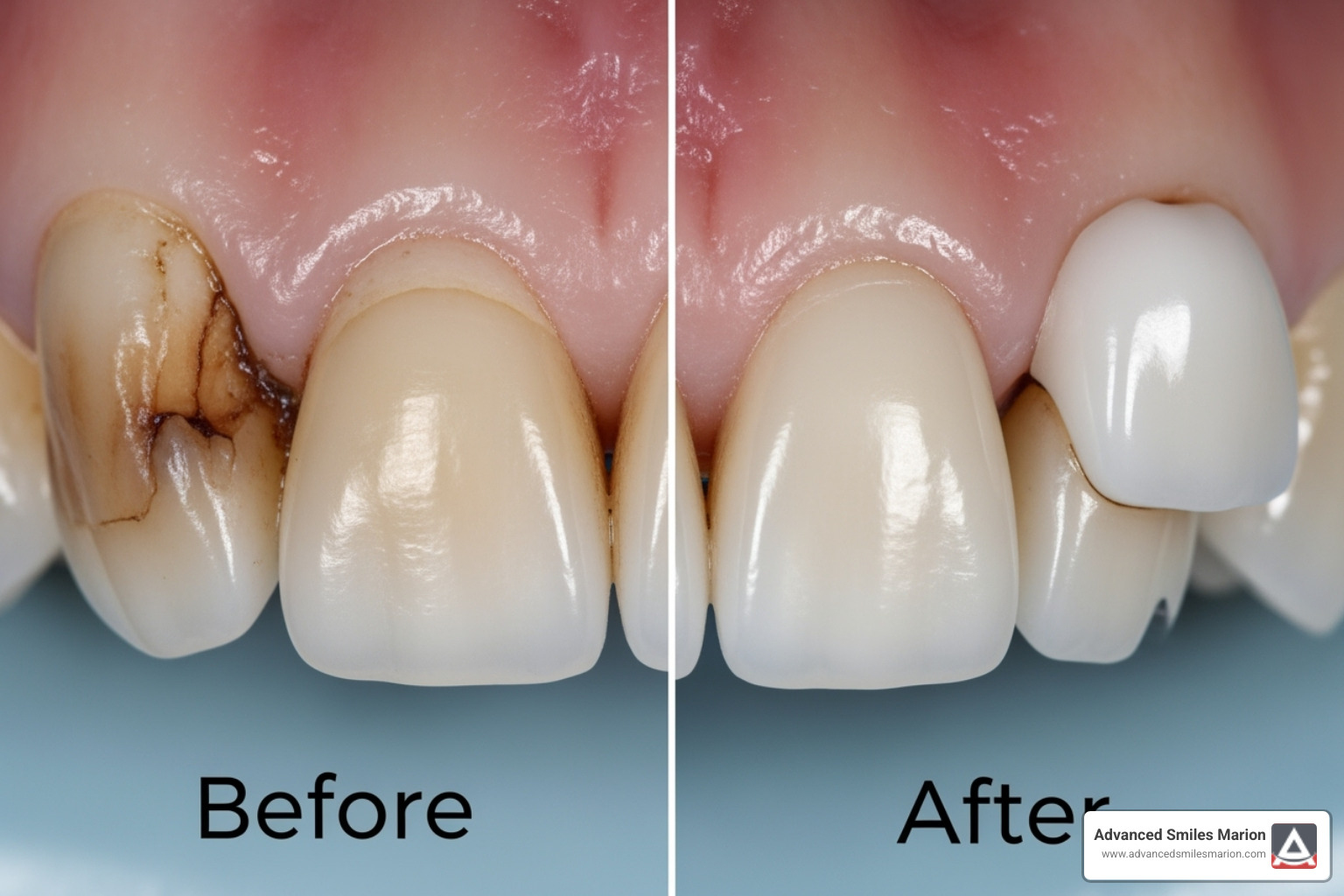
While our dentists place a temporary filling right after your root canal, that's exactly what it is—temporary. It's designed to protect your tooth for a short time, but it's not built to withstand the daily demands of chewing, biting, and grinding. Here's the thing: once a tooth has had its pulp removed, it becomes more brittle over time. Without the blood supply nourishing it from the inside, the tooth can become fragile and vulnerable to fractures.
That's where a dental crown comes in. A crown is essentially a custom-made cap that covers the entire visible portion of your tooth, restoring its strength and protecting it from breaking. This is especially crucial for your back teeth—those molars and premolars that do the heavy lifting when you're enjoying a crunchy apple or a thick steak.
A crown serves several vital purposes. First and foremost, it protects your tooth from fracturing under the normal biting forces you use every day. Second, it restores full function, meaning you can chew comfortably and confidently on that tooth again. And third, it maintains your natural appearance—crowns can be perfectly matched to the color of your surrounding teeth, so no one will even know you've had work done.
The crown placement typically happens at a separate appointment after your root canal has healed. During this visit, our dentists will prepare your tooth by gently shaping it to fit the crown, take detailed impressions to ensure a perfect fit, and then place your custom-crafted crown. The entire crown appointment usually takes about 1 to 2 hours, though this can vary depending on the specific situation. For more detailed information about this process, visit our page on Root Canal Treatment Crown.
Understanding how long root canal treatment takes means considering this final restoration step as part of your overall timeline. While the root canal procedure itself might take an hour or two, the complete treatment process includes this crucial crown placement to ensure your tooth is fully protected.
With proper care and attention, a tooth that's been treated with a root canal and restored with a crown can last a lifetime. Our dentists will provide you with comprehensive guidance on maintaining your crown, and you can find additional tips on our Dental Crown Care page. This final step isn't just about completing the treatment—it's about investing in the long-term health and function of your natural tooth.
Your Questions Answered: Root Canal FAQs
We understand you likely have more questions about root canal procedures beyond just how long root canal treatment takes. Here are answers to some of the most common concerns we hear from our patients at Advanced Smiles Marion:
Does a root canal hurt?
This is perhaps the most common question and biggest fear surrounding root canals. The truth is, thanks to modern local anesthesia, a root canal should not be a painful experience. Our dentists ensure the area is thoroughly numb before beginning the procedure. You might feel some pressure or movement during the treatment, but typically no sharp pain.
Here's something that might surprise you: the pain you experience before the root canal, caused by the infection, is almost always far worse than any discomfort during or after the procedure. Many patients actually feel relief once the infected pulp is removed and the pressure subsides.
After the anesthesia wears off, it's normal to experience some mild soreness or sensitivity for a few days. This is usually manageable with over-the-counter pain relievers. If you're concerned about discomfort, please read our dedicated article: Root Canal Hurt. Our dentists are committed to patient comfort, using advanced techniques and technology to make your experience as gentle as possible.
What are the benefits of a root canal vs. extraction?
When faced with a severely damaged or infected tooth, you might wonder if it's easier to just pull it out. While extraction removes the problem tooth, a root canal offers significant advantages that make it worth considering.
Saving your natural tooth is the biggest benefit. Nothing looks, feels, or functions quite like your natural tooth. A root canal allows you to keep it, which helps maintain proper bite alignment. When a tooth is removed, adjacent teeth can shift over time, leading to bite problems and potential jaw issues. Your natural tooth acts like a placeholder, keeping everything in its proper position.
There's also the matter of appearance. Your natural tooth, especially when restored with a well-matched crown, maintains your natural appearance without the telltale signs of replacement teeth. Additionally, keeping your tooth helps prevent bone loss. When a tooth is extracted, the bone that supported it can begin to deteriorate over time, which can affect your facial structure.
Finally, there's the cost-effectiveness in the long run. While an extraction might seem cheaper initially, replacing a missing tooth with a dental implant (which averages about $4500 for a single tooth) or a bridge can be significantly more expensive over time than a root canal and crown. For a detailed comparison, see our resource on Tooth Extraction vs Root Canal.
When should I call the dentist after my procedure?
While some discomfort after a root canal is normal, there are specific signs that warrant a call to our office right away. Severe or worsening pain that's intense, throbbing, or doesn't improve with prescribed medication after a few days should be reported immediately. Similarly, any visible swelling in your face or gums that appears new or doesn't subside needs attention.
If you experience an allergic reaction to medication—such as a rash, hives, or difficulty breathing—seek immediate medical attention and then inform our office. If your temporary filling comes out completely or you lose a piece of it, call us so we can advise on the next steps to protect your tooth until your permanent restoration.
Watch for signs of infection, including a foul taste, pus, or a new "pimple" on your gums. While some sensitivity is normal, persistent severe sensitivity to hot or cold that doesn't improve could indicate an issue as well.
These could be signs of complications or even a Failed Root Canal. Our team at Advanced Smiles Marion is always ready to provide emergency dental care, and we're able to see patients the same day for urgent issues most of the time. Don't hesitate to reach out if something doesn't feel right—we're here to help.
Secure Your Smile with Expert Care
If you're dealing with tooth pain or have been told you need a root canal, taking action now can save you from more serious problems down the road. A root canal is one of the most effective procedures in dentistry, designed specifically to relieve pain and rescue your natural tooth from extraction. And while how long root canal treatment takes can vary based on your unique situation, modern dentistry has made the process remarkably comfortable and efficient.
At Advanced Smiles Marion, our experienced dental team brings together advanced education, ongoing professional development, and state-of-the-art technology to provide gentle, precise root canal therapy. Our dentists stay current with the latest endodontic techniques and use cutting-edge tools to ensure your procedure is completed efficiently without compromising quality. We're proud to offer comprehensive dental services that go far beyond root canals—from routine oral hygiene and wellness check-ups to advanced procedures like dental implants, veneers, and crowns. We also provide cosmetic treatments such as Invisalign and teeth whitening, plus specialized laser treatments for TMJ pain, canker sore healing, and periodontal disease.
We understand that dental emergencies don't follow a schedule. That's why we offer emergency dental treatments and can usually see patients the same day when urgent issues arise. Whether you're experiencing severe tooth pain or need immediate care, our team is ready to help.
For families and individuals without insurance, our Dental Wellness Plan makes quality dental care accessible and affordable. This plan now includes two fluoride treatments a year, along with the preventive care you need to maintain optimal oral health. We believe everyone deserves world-class dental solutions custom to their unique needs and budget.
Don't let tooth pain disrupt your life any longer. Learn more about our Advanced Dentistry: Root Canal Procedure and schedule your consultation today. Our compassionate team is here to guide you back to a pain-free, healthy smile—and we'll make sure you feel comfortable and informed every step of the way.

Panel 6: Hope on the Horizon
The mural culminates in a vision of Marion's future, one marked by technological advancements, sustainability, and community togetherness. The cardinal, elevated above a futuristic cityscape, looks ahead with optimism, its backdrop a blend of colors signifying hope.
Get in touch
Have any questions? Want to learn more?


