
Dental Veneers Terms Demystified


What Are Dental Veneers? A Quick Answer Before We Dive In

Dental veneers are thin, custom-made shells bonded to the front surface of your teeth to improve their appearance. Here is what you need to know at a glance:
- What they are: Wafer-thin coverings made from porcelain or composite resin
- What they fix: Stained, chipped, gapped, misshapen, or slightly crooked teeth
- Types available: Porcelain, composite resin, no-prep (like Lumineers), and removable snap-on veneers
- How long they last: Porcelain veneers can last 20 years or more; composite veneers typically 5 to 7 years
- Number of visits: Usually 2 to 3 appointments for porcelain; composite can often be done in one visit
- Are they permanent? Yes, traditional veneers require some enamel removal and are considered irreversible
Think of a veneer like a false fingernail - it fits right over your existing tooth and instantly changes how it looks.
Veneers are one of the most popular cosmetic dental options available today. They can close gaps, mask deep stains that whitening cannot touch, and give you a symmetrical, camera-ready smile - often in just two visits.
But with so many terms floating around - laminate veneers, no-prep, snap-on, composite bonding - it is easy to feel lost before you even sit in the chair.
That is exactly why the highly educated and experienced dentists at Advanced Smiles Marion put this guide together. With deep expertise in cosmetic dentistry and a commitment to staying current with the latest advances in dental veneers and smile design, our team is here to cut through the confusion and help you make a confident, informed decision.
Understanding the Basics: What Are Veneers?
At its simplest, a dental veneer is a thin laminate designed to act as aesthetic camouflage for your smile. If you have ever felt self-conscious about a chipped tooth or a stubborn stain that just won't go away with traditional teeth whitening, dental veneers offer a comprehensive solution.
These shells are typically made from either medical-grade porcelain or a tooth-colored composite resin. Unlike a dental crown, which covers the entire tooth like a cap, a veneer only covers the front-facing surface. This makes them a more conservative option because we don't have to remove as much of your natural tooth structure to achieve a beautiful result.
Veneers serve two primary purposes:
- Cosmetic Enhancement: They can change the color, shape, size, or length of your teeth.
- Protection: In some cases, they can provide a layer of enamel protection for teeth that have become worn down or eroded.
Because they are custom-made for each individual patient, we can match the shade of your veneers to your surrounding teeth, ensuring a result that looks entirely natural. For many of our patients in Marion, OH, this "smile makeover" is a life-changing investment in their self-confidence.
For more detailed information on the medical uses and definitions of these restorations, you can visit the Cleveland Clinic's guide to veneers or explore our own dedicated dental veneers page.
Comparing the Different Types of Dental Veneers
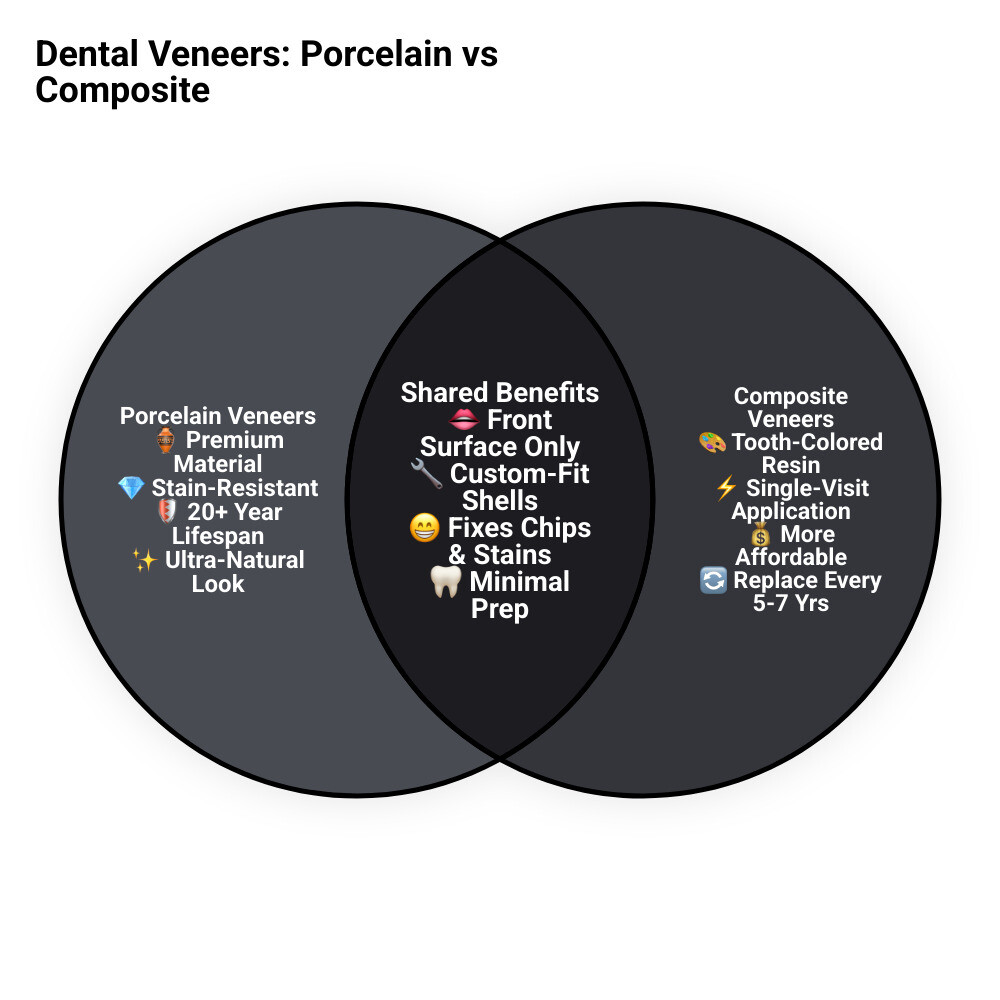
Choosing the right type of veneer depends on your aesthetic goals, your budget, and how much of your natural tooth you are comfortable "prepping." Here is a breakdown of the three most common options we provide:
| Feature | Porcelain Veneers | Composite Resin Veneers | No-Prep Veneers (e.g., Lumineers) |
|---|---|---|---|
| Material | High-quality ceramic | Plastic and ceramic blend | Ultra-thin porcelain |
| Lifespan | 10–25 years | 5–7 years | 10–20 years |
| Stain Resistance | High (Highly resistant) | Moderate (Can stain over time) | High |
| Invasiveness | Requires enamel removal | Minimal to no removal | Very minimal to no removal |
| Number of Visits | 2–3 visits | Often just 1 visit | 2 visits |
Porcelain Veneers
Porcelain is the "gold standard" for a reason. These veneers are incredibly durable and possess a translucency that mimics natural tooth enamel perfectly. They are highly resistant to stains from coffee, tea, or red wine. While they require a small amount of enamel removal (usually less than 0.5mm), they offer the most transformative and long-lasting results.
Composite Resin Veneers
Often referred to as tooth bonding, composite veneers are made from a tooth-colored resin that is applied directly to the tooth. These are more affordable and can usually be completed in a single visit. However, they are more prone to staining and chipping than porcelain and typically need replacement every 5 to 7 years.
No-Prep Veneers
Brands like Lumineers or Vivaneers are so thin (roughly the thickness of a contact lens) that they can often be applied directly over your natural teeth without any grinding or shaving. This makes the process reversible in some cases, although they may not be suitable for masking very dark stains or severe misalignments.
A Note on Removable "Snap-On" Veneers
You may have seen advertisements for removable or "pop-on" veneers. While these are a lower-cost alternative, we urge caution. These are not permanent dental restorations and do not offer the same health benefits or natural look as bonded veneers. They can also trap food and bacteria against your teeth, potentially leading to gum disease or decay if not used carefully.
For a deeper dive into the history and technical classifications of these materials, you can read more on Wikipedia's Veneer page).
The Step-by-Step Application Process
Getting dental veneers is a collaborative process between you and our highly involved dentists. We use cutting-edge technology, including digital impressions and CAD/CAM (Computer-Aided Design and Manufacturing), to ensure your new smile fits perfectly.
1. The Consultation and Planning
Everything starts with a conversation. We discuss your goals and use digital X-rays to ensure your teeth and gums are healthy. We might even create a "wax-up" model so you can see a preview of your results before we begin.
2. Preparation
For traditional porcelain veneers, we need to make a tiny bit of room. We remove about 0.5mm of enamel from the front and sides of the tooth. This ensures the veneer doesn't look "bulky" or fake once it is bonded. We often use a local anesthetic to ensure you are completely comfortable during this step.
3. Impressions and Temporaries
Once the teeth are prepped, we take a digital scan or a physical mold of your teeth. This is sent to a professional dental lab where your custom shells are crafted. While you wait (usually about two weeks), we may place temporary veneers to protect your teeth and give you a "test drive" of your new look.
4. Bonding
When your permanent veneers arrive, we check the fit and color. We then cleanse the tooth with a special liquid to roughen the surface slightly—this helps the bonding cement stick. After applying the cement and placing the veneer, we use a special light beam to harden the bond instantly.
5. Final Adjustments
We check your bite and make any minor adjustments needed. We usually ask you to come back for a follow-up in a week or two to ensure your gums are healing well and you are loving your new smile.
It is important to understand the difference between veneers and crowns. While veneers only cover the front, a crown covers the whole tooth. If a tooth is severely broken or has had a root canal, a crown might be the better choice for strength.
Candidacy and Alternatives to Treatment
Are dental veneers right for you? Most people who want to fix cosmetic issues are great candidates, but there are a few things we look for first.
Who is a good candidate?
Veneers are excellent for correcting:
- Diastema: Closing small gaps between teeth.
- Tetracycline Staining: Masking deep internal stains that don't respond to whitening.
- Chipped or Worn Teeth: Restoring the natural shape of teeth damaged by minor accidents or age.
- Minor Misalignment: Giving the appearance of straight teeth without years of braces (Invisalign is another great option we offer for this!).
Who might need to wait?
If you have active gum disease or extensive cavities, we need to treat those first. Our goal is to ensure your "foundation" is healthy before we build your new smile. Also, if you have a habit of bruxism (clenching or grinding your teeth), you might not be an immediate candidate for veneers because the pressure can crack the porcelain. In these cases, we often recommend a custom night guard to protect your investment.
Alternatives to Veneers
Depending on your needs, we might suggest other treatments:
- Teeth Whitening: If color is your only concern, professional whitening is a great first step.
- Tooth Bonding: For very minor chips, a simple resin repair might be enough.
- Dental Implants: If a tooth is missing entirely, an endosteal dental implant is the gold standard for replacement.
- Crowns: If the tooth is structurally weak, a crown provides more protection. You can read our expert insights on veneers vs. crowns to see which fits your situation.
Longevity, Costs, and Aftercare
Investing in your smile is a big decision, and we want you to know exactly what to expect regarding the "mileage" and maintenance of your veneers.
The Lifespan of Dental Veneers
Veneers are not considered permanent in the sense that they will never need replacement, but they are incredibly durable.
- Porcelain Veneers: With proper care, these can last 20 to 25 years without losing their color or luster.
- Composite Veneers: These typically last 5 to 7 years.
- Statistics to Note: Research shows that after 10 years, about 50% of veneers may need some form of re-treatment or replacement. This is why regular check-ups are so vital!
Caring for Your Dental Veneers
Once your veneers are in place, they don't require "special" tools, but they do require good habits:
- Oral Hygiene: Brush twice a day with a non-abrasive fluoride toothpaste and floss daily.
- Watch Your Diet: While porcelain is strong, it can chip if you bite down on ice, hard candy, or popcorn kernels. We recommend chewing very hard foods with your back molars.
- Avoid Stains: Although porcelain resists stains, the cement holding them can discolor over time. Rinsing with water after drinking coffee or red wine helps keep everything bright.
- Regular Visits: Come see us for your wellness check-ups! We can polish your veneers and catch any minor issues before they become big problems.
Regarding the cost of dental veneers, prices can vary based on the material used and the complexity of your case. Generally, porcelain veneers range from $900 to $2,500 per tooth. While this is an upfront investment, the long lifespan of porcelain often makes it more cost-effective over several decades than composite resin.
Frequently Asked Questions
Do veneers require shaving down my natural teeth?
This is one of the biggest myths we hear! You might have seen "horror stories" online of teeth being shaved down into little "pegs." In reality, traditional dental veneers only require the removal of a tiny amount of enamel—usually less than 0.5mm. This is about the thickness of a fingernail. However, because that enamel is removed, the process is considered irreversible. If you want a non-invasive option, we can talk about no-prep veneers.
Are dental veneers covered by insurance?
Most dental insurance plans consider veneers a "cosmetic" procedure, meaning they don't typically cover the cost. However, if a veneer is medically necessary—for example, to repair a tooth damaged in an accident or to replace a failing restoration—there may be partial coverage. We always recommend checking with your provider. For those without insurance, our Dental Wellness Plan offers a way to get your yearly care and discounts on other treatments for a simple annual fee.
You can find more details on teeth veneers price and insurance here.
What is the recovery period after getting veneers?
There is virtually no "downtime." You can usually go back to work or school the same day. You might experience some temporary sensitivity to hot and cold for a few days as your teeth adjust to the new shells. Your gums might also be slightly sore for a day or two as they heal around the new margins. Most importantly, it may take a few days for your brain to get used to the feel of your new teeth—if your bite feels "off" after a week, just give us a call for a quick adjustment!
Conclusion
At Advanced Smiles Marion, we believe that everyone in Marion, OH deserves a smile they are proud to show off. Our highly educated and involved dentists stay at the forefront of cosmetic dentistry to provide you with results that are not just beautiful, but healthy and long-lasting.
Whether you are interested in dental veneers, Invisalign, or professional teeth whitening, we tailor every treatment plan to your unique needs. We also understand that dental care can be a financial concern, which is why we offer our Dental Wellness Plan. This plan is perfect for families without insurance, providing your yearly exams, cleanings, and two fluoride treatments annually at a discounted price.
Beyond cosmetic care, we are here for your overall health. We feature advanced laser treatments for TMJ pain, canker sore healing, and periodontal disease. And if you ever find yourself in a bind, we offer emergency dental treatments, often with same-day appointments.
Ready to see what dental veneers can do for you? Learn more about our dental veneers services and schedule your consultation today. Let’s work together to create the radiant, confident smile you’ve always wanted!
Get in touch
Have any questions? Want to learn more?


