
Beyond the Brush: Discovering the Best Teeth Cleaning Tools for Home Use


Your Guide to a Dentist-Clean Feeling at Home
The best teeth cleaning tools for home use go far beyond a basic toothbrush. To get that dentist-clean feeling at home, you need the right arsenal. Here's what works:
Essential & Advanced Tools:
- Electric toothbrush: Removes up to 21% more plaque than manual brushes.
- Fluoride toothpaste: Strengthens enamel and prevents decay.
- Interdental cleaners: String floss, picks, or brushes to clean between teeth.
- Water flosser: Excellent for braces, implants, and hard-to-reach spots.
- Tongue scraper: Removes bacteria causing bad breath.
- Plaque disclosing tablets: Highlights missed plaque to improve your technique.
- Mouth mirror: For self-inspection of hard-to-see areas.
- Antibacterial rinse: An alcohol-free rinse for a final clean.
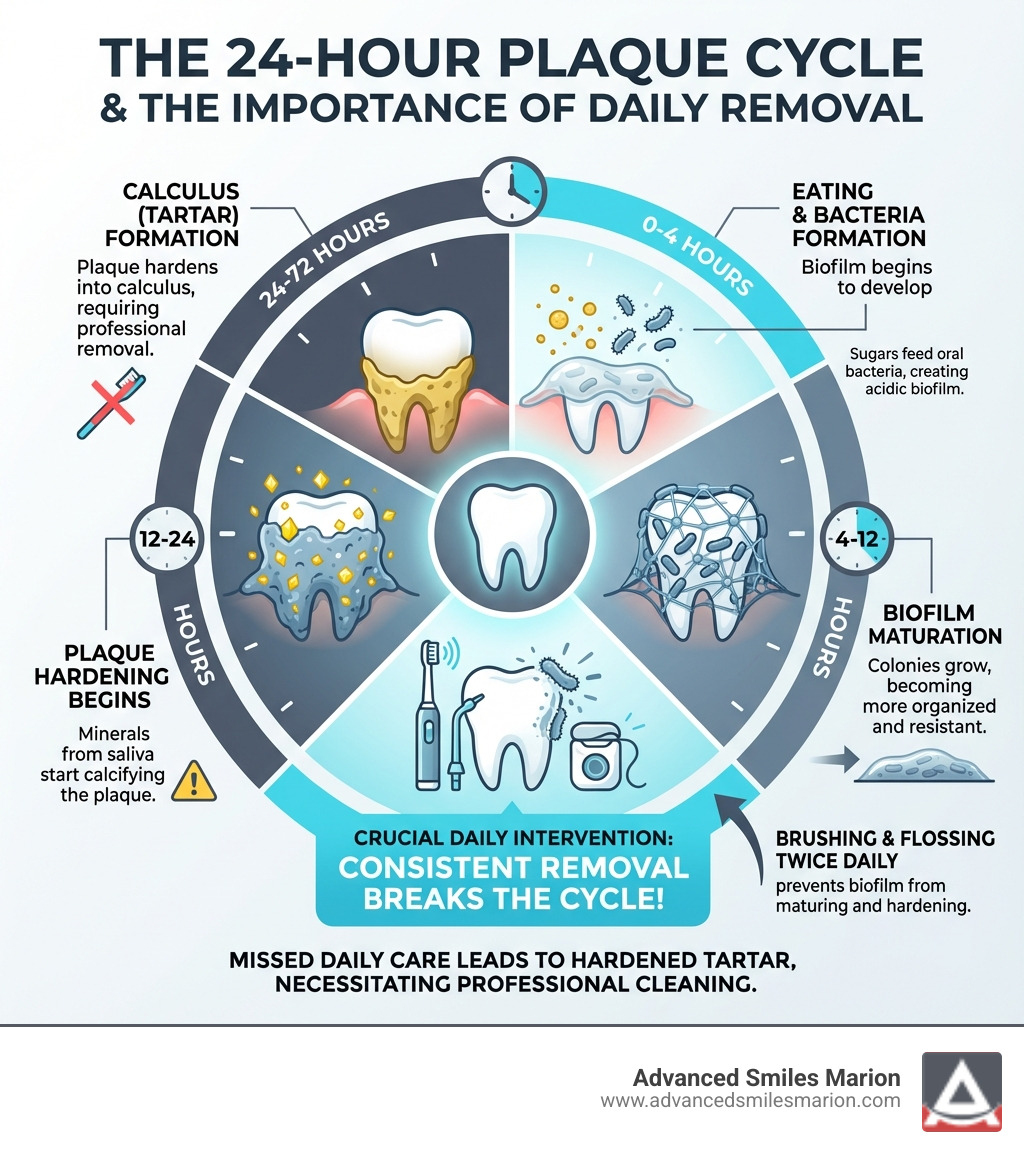
Maintaining oral health between professional visits is crucial. With the right tools, you can significantly reduce plaque before it hardens into tartar, which can happen in just 24-72 hours.
In fact, 42% of adults now use specialized at-home dental cleaning tools beyond basic brushing and flossing. This trend shows a growing awareness that daily prevention is key. The challenge is knowing which tools are effective and how to use them safely without harming your enamel or gums.
This guide covers the most effective tools for a complete at-home routine. You'll learn what each tool does, how to use it, and when to seek professional expertise.
At Advanced Smiles Marion, our team of highly educated dentists stays at the forefront of dental innovations, offering advanced treatments like laser therapy for periodontal disease and TMJ pain relief. Our comprehensive Dental Wellness Plan, which includes two fluoride treatments per year, combines consistent home care with professional expertise, making quality dental care accessible to every family in Marion.
Important best teeth cleaning tools for home use terms:
The Foundation: Essential Daily Oral Hygiene Tools
A strong daily oral hygiene routine is the bedrock of a healthy smile and our first line of defense against plaque. If not removed, plaque leads to cavities, gum disease, and hardens into tartar. The right tools ensure we effectively tackle plaque every single day.
Electric vs. Manual Toothbrushes: Which is Better?
While a manual toothbrush can be effective with perfect technique, studies show electric toothbrushes have a clear advantage. Their oscillating, rotating, or vibrating bristles are highly efficient at removing plaque from the tooth's surface and along the gumline. Instead of scrubbing, you simply guide the brush head along your teeth at a 45-degree angle to the gums.
A significant a 2014 Cochrane review found that electric toothbrush users had 21% less plaque and 11% less gum inflammation (gingivitis) after three months compared to manual brush users. While a manual brush can work, an electric one provides a more thorough clean with less effort.
Many electric models also include helpful features like built-in two-minute timers and pressure sensors to prevent brushing too hard, which protects your gums and enamel. These features make them a worthwhile investment for anyone looking to improve their daily routine.
The Power of Fluoride Toothpaste
Fluoride toothpaste is essential for strengthening teeth and preventing decay. This natural mineral helps remineralize enamel, the hard outer layer of your teeth. When acids from bacteria attack enamel, fluoride replaces lost minerals, strengthening the tooth and making it more resistant to future decay. It can even reverse the earliest signs of a cavity.
To maximize its benefits, avoid rinsing immediately after brushing to allow the fluoride more time to work. Always choose a toothpaste with the American Dental Association (ADA) Seal of Acceptance.
While alternatives like baking soda exist, they don't replace fluoride's protective power. If you get canker sores, an SLS-free toothpaste may help. We also advise against charcoal toothpaste due to its abrasive nature, which can damage enamel.
For more comprehensive advice on keeping your smile healthy, check out our Tips for Good Oral Health.
Mastering Interdental Cleaning: Floss, Picks, and Brushes
Brushing alone isn't enough, as toothbrushes can't reach the tight spaces between teeth where plaque and food particles hide. Daily interdental cleaning is non-negotiable to prevent cavities and gum inflammation.
- String Floss: The gold standard for cleaning. When wrapped in a "C" shape around each tooth, it effectively scrapes away plaque from below the gumline. We recommend PFAS-free options.
- Floss Picks: A convenient alternative to string floss, especially for reaching back teeth or for cleaning on the go.
- Interdental Brushes: These small brushes are ideal for cleaning larger gaps between teeth, around orthodontic brackets, or under dental implants and bridges.
- Soft-Picks: A gentle option with rubber bristles, excellent for cleaning between teeth and along the gumline, especially for those with sensitive gums.
Try the "floss first philosophy": flossing before brushing dislodges debris, allowing your fluoride toothpaste to work more effectively on more tooth surfaces. Consistent daily interdental cleaning is a cornerstone of Dental Hygiene Care.
Level Up Your Routine: Advanced Tools for a Deeper Clean
Once you've mastered the basics, incorporating advanced tools can lift your oral hygiene routine, providing precision cleaning and targeting those hard-to-reach areas that even diligent brushing and flossing might miss.
Water Flossers: A High-Tech Approach to Gum Health
Water flossers use a powerful stream of pulsating water to dislodge food, plaque, and bacteria from between teeth and below the gumline. They are particularly effective for cleaning around dental work and are an excellent addition to your routine, especially if you have:
- Orthodontic Brackets: A water flosser easily cleans around wires and brackets where plaque accumulates.
- Dental Implants or Bridges: Meticulous cleaning is required for these restorations. At Advanced Smiles Marion, we offer endosteal dental implants, averaging around $4500 for a single tooth, and proper home care with tools like water flossers is crucial for their longevity.
- Sensitive Gums or Gum Disease: The gentle, pulsating water massages gums, promotes circulation, and helps reduce inflammation. The pressure is adjustable for comfort.
- Difficulty with String Floss: A water flosser is a great alternative if you struggle with traditional flossing technique.
Studies confirm their effectiveness, showing significant plaque reduction. While powerful, we recommend using a water flosser in addition to traditional flossing for the most comprehensive clean.
For more insights into maintaining a healthy mouth, explore our Oral Health Tips for Adults.
Tongue Scrapers: The Secret to Fresher Breath
The tongue's rough surface is a breeding ground for bacteria and debris that cause about 80% of bad breath (halitosis). A tongue scraper is far more effective than a toothbrush at gently removing this buildup. Incorporating it into your daily routine can:
- Combat Bad Breath: Directly removes odor-causing bacteria.
- Improve Taste: Clearing debris from your tongue can improve your ability to taste food.
- Reduce Plaque: Fewer bacteria on the tongue means less can migrate to your teeth.
This quick step is crucial for complete oral hygiene, leaving your mouth feeling cleaner and fresher. For more solutions to common oral health concerns, visit our Bad Breath Solutions page.
Plaque Disclosing Tablets: See What You're Missing
Plaque disclosing tablets act like a personal coach for your brushing. These chewable tablets temporarily dye any plaque you've missed, usually bright red or pink. After brushing and flossing, simply chew a tablet, swish, and spit. The colored areas give you instant visual feedback on your technique.
This valuable tool helps both adults and children by:
- Improving Brushing Technique: It shows you exactly where to adjust your angle or focus for a better clean.
- Ensuring a Thorough Clean: You can go back and clean the spots you missed.
- Motivating Better Habits: The visual proof of leftover plaque is a powerful motivator.
We recommend using plaque disclosing tablets weekly to fine-tune your routine and ensure your home care is as effective as possible.
The Professional's Perspective on the Best Teeth Cleaning Tools for Home Use
While we champion proactive home care, approach certain tools with a professional perspective, understanding their safety concerns, proper usage, and inherent limitations. Our goal is always to empower you with the best teeth cleaning tools for home use that genuinely improve your oral health without risking harm.
Can You Safely Use Dental Scalers and Picks at Home?
This is perhaps one of the most frequently asked questions we hear: can professional dental tools be used safely at home for cleaning teeth? Our short answer, and the resounding consensus among dental professionals, is generally no, it is not recommended.
While you can purchase stainless steel scaling and scraping instruments online, and some product listings might encourage their home use, the risks far outweigh any perceived benefits. Dentists and hygienists undergo extensive training to use these sharp instruments precisely and safely, navigating the delicate tissues of your gums and the hard surfaces of your teeth without causing damage.
The potential dangers of using metal dental scalers at home include:
- Enamel Scratching: Improper technique can easily scratch or chip your tooth enamel, making it more susceptible to decay and sensitivity.
- Gum Trauma: Aggressive or incorrect use can cut, puncture, or cause irreversible gum recession. Scientific research on gum disease shows that gum recession from improper tool use is often irreversible.
- Infection: Creating open wounds in the gums can introduce bacteria into the bloodstream, leading to localized infections or more serious systemic issues.
- Ineffective Tartar Removal: Home users often only remove superficial plaque, leaving hardened tartar (calculus) intact or even pushing it further under the gumline, worsening the problem.
If you absolutely must use a dental pick for a stubborn food particle, we strongly advise using a plastic scaler with extreme caution and a very light touch, and never going deeper than 3mm below the gumline. These should be used no more than 2-3 times per week. Metal scalers should be used once weekly at most, and only on the visible surfaces, with a gentle, flicking motion. However, we, the educated dentists at Advanced Smiles Marion, strongly advise against using professional dental tools at home due to the high risk of injury and potential for permanent damage. It's simply not worth the risk to your oral health.
The Role of a Mouth Mirror in Your At-Home Care
While we discourage the use of sharp professional tools, one professional-style tool that is incredibly beneficial and safe for home use is a mouth mirror. What is the role of a mouth mirror in at-home dental care? It acts as your personal dental assistant, providing a clear view of areas that are otherwise impossible to see.
A mouth mirror allows for:
- Self-Inspection: You can regularly inspect your teeth for any changes, such as new stains, chips, or unusual spots.
- Monitoring for Changes: It helps you keep an eye on your gumline for any signs of inflammation or recession.
- Checking for Missed Food or Plaque: After brushing and flossing, you can use the mirror to ensure you haven't missed any stubborn food particles or plaque, especially on the chewing surfaces of your back molars or the inside of your front teeth.
- Aiding in Effective Cleaning: By seeing what you're doing, you can guide your toothbrush or floss more precisely, leading to a more effective clean.
Incorporating a mouth mirror into your routine is a simple, safe way to be more proactive about your oral health. For more ways to maintain a healthy mouth, explore our resources on Dental Hygiene and Wellness.
The Finishing Touch: Is Mouthwash Necessary?
Many people wonder if oral rinse (mouthwash) is a necessary part of a dental routine. We view mouthwash as a valuable supplement, a "finishing touch" that improves your brushing and flossing, but never replaces them.
The advantages of using oral rinse (mouthwash) as part of a dental routine include:
- Antibacterial Action: Many mouthwashes contain antibacterial agents that can reduce plaque, kill bacteria responsible for gingivitis, and freshen breath. They can reach areas that brushing and flossing might miss, providing an extra layer of cleanliness.
- Freshening Breath: By reducing bacteria, mouthwash can help eliminate bad breath, leaving your mouth feeling minty fresh.
- Fluoride Benefits: Some mouthwashes contain fluoride, offering additional cavity protection.
However, it's important to choose wisely. We recommend alcohol-free antibacterial rinses, as alcohol-based mouthwashes can dry out your mouth, which can actually contribute to bad breath and other oral health issues. While mouthwash can be a helpful addition, just rinsing with mouthwash is not enough to remove plaque effectively. It's always a complement to, not a substitute for, thorough brushing and flossing. For specific conditions like persistent bleeding gums, your dentist might prescribe a chlorhexidine mouthwash for short-term use.
At-Home Care vs. Professional Cleaning: Knowing the Difference
Despite our best efforts with the best teeth cleaning tools for home use, there's a fundamental difference between what we can achieve at home and what a professional dental cleaning provides. Understanding the distinction between plaque and tartar, and the limitations of DIY cleaning, is key to maintaining optimal oral health. Our dentists and hygienists play an irreplaceable role in your oral wellness journey.
What At-Home Tools Can't Do: Removing Hardened Tartar
One of the most critical differences between at-home and professional dental cleaning lies in the removal of tartar. Plaque, as we know, is a soft, sticky film of bacteria that forms constantly. If we don't remove this plaque through daily brushing and flossing, it begins to harden into calculus, or tartar, within a mere 24 to 72 hours.
And here's the crucial point: once plaque has solidified into tartar, it cannot be removed with a toothbrush, floss, or any of the best teeth cleaning tools for home use discussed so far. Tartar is strongly bonded to the tooth surface and requires professional intervention. This is why it's necessary to seek professional help for plaque and tartar removal.
Professional dental cleanings use specialized instruments, most notably ultrasonic scalers, which generate high-frequency vibrations to effectively break the bond of hardened tartar without damaging your teeth. These powerful tools, combined with the skilled hands of our hygienists, can safely and thoroughly remove tartar from above and below the gumline. Home kits, even the most advanced ones, simply cannot replicate this power or precision.
This is why, even with a stellar home routine, regular professional cleanings are essential. They ensure that any hardened buildup is removed, preventing it from contributing to gum disease and tooth decay. You can learn more about this stubborn substance on our Tartar Stain Remover page, and further scientific understanding of it can be found in Scientific research on calculus (hardened plaque).
When to See a Dentist: Red Flags to Watch For
While your comprehensive at-home routine is vital, it complements, rather than replaces, regular visits to Advanced Smiles Marion. There are clear red flags that indicate it's time to put down your best teeth cleaning tools for home use and schedule an appointment with our team. When is it necessary to seek professional help for plaque and tartar removal, or other issues?
Look out for these warning signs:
- Persistent Bleeding Gums: While some occasional bleeding during flossing might occur, consistent bleeding, especially during brushing or spontaneously, is a sign of gum inflammation or disease.
- Tooth Pain or Sensitivity: Any new or worsening pain, particularly when eating hot, cold, or sweet foods, could indicate a cavity, exposed root, or other dental problem.
- Gum Recession: If your gums appear to be pulling away from your teeth, exposing more of the tooth root, it's a sign of gum disease and needs immediate attention.
- Loose Teeth or Changes in Bite: This is a serious indicator of advanced gum disease or other underlying issues.
- Signs of Infection: Swelling, pus, or a persistent bad taste in your mouth could all point to an infection.
- Stubborn Buildup: If you notice yellow or brown deposits on your teeth that won't budge with your at-home tools, it's hardened tartar that needs professional removal.
- Persistent Bad Breath: Even with diligent home care, if bad breath persists, it could be a sign of an underlying oral health issue.
- White or Red Patches: Any unusual white or red patches on your gums, tongue, or inside your cheeks should be examined by a dentist.
Our highly educated dentists at Advanced Smiles Marion are here to help. We offer comprehensive Dental Hygiene Services and are equipped to address any concerns. We also understand that emergencies happen, which is why we offer emergency dental treatments and are often able to see people the same day. Don't hesitate to reach out if you notice any of these red flags.
Frequently Asked Questions about At-Home Teeth Cleaning
How do electric toothbrushes compare to manual ones for plaque removal?
Electric toothbrushes generally offer superior plaque removal compared to manual toothbrushes. Their oscillating, rotating, or vibrating motions are highly effective at disrupting and sweeping away plaque from tooth surfaces and along the gumline. Studies show they can remove significantly more plaque and reduce gum inflammation. Key features like built-in timers ensure you brush for the recommended two minutes, and pressure sensors help prevent you from brushing too hard, protecting your gums and enamel. While a manual toothbrush can be effective with perfect technique, electric toothbrushes provide a more consistent and thorough clean with less reliance on manual dexterity.
Are natural toothpaste ingredients like baking soda beneficial?
Yes, natural toothpaste ingredients like baking soda can be beneficial for teeth cleaning, but with caveats. Baking soda is a mildly abrasive substance that can help polish away surface stains, contributing to a brighter smile. It also has the benefit of neutralizing acids in the mouth, which can help create a less hospitable environment for cavity-causing bacteria. However, due to its abrasive nature, we recommend using baking soda-infused toothpaste or a baking soda polish sparingly – perhaps once weekly or monthly – to avoid potential enamel wear over time. Crucially, baking soda is not a replacement for fluoride toothpaste, which actively strengthens enamel and fights decay. Always ensure your primary toothpaste contains fluoride for cavity protection.
How often should I use tools like water flossers or dental picks?
The frequency of use for various best teeth cleaning tools for home use depends on the specific tool:
- Electric Toothbrush: Twice daily, for two minutes each time.
- String Floss / Floss Picks / Interdental Brushes: At least once daily to clean between all teeth.
- Water Flosser: Can be used daily, either before or after brushing, especially beneficial for those with braces, implants, or gum disease.
- Tongue Scraper: Once daily, usually after brushing, for fresher breath.
- Plastic Dental Scalers / Picks: Use with caution, 2-3 times per week maximum, for superficial plaque removal.
- Metal Dental Scalers / Picks: We strongly advise against home use. If used with extreme caution and a light touch, no more than once weekly, and never deeper than 3mm below the gumline.
- Plaque Disclosing Tablets: Weekly, to check and improve your brushing technique.
- Baking Soda Polish: Once monthly, to avoid enamel wear.
Consistency is key for all these tools, but always prioritize safety and consult with our dentists if you're unsure about proper usage.
Conclusion: Building Your Perfect At-Home Dental Toolkit
Building your perfect at-home dental toolkit is about creating a comprehensive, personalized routine that effectively removes plaque, prevents cavities, and maintains gum health. We've explored the best teeth cleaning tools for home use, from the daily essentials like electric toothbrushes, fluoride toothpaste, and interdental cleaners, to advanced aids like water flossers, tongue scrapers, and plaque disclosing tablets. Each tool plays a unique role in enhancing your oral hygiene.
However, it's crucial to remember that diligent home care, no matter how advanced, always complements, and never replaces, professional dental care. Your home efforts keep soft plaque at bay, but only our skilled hygienists and highly educated dentists at Advanced Smiles Marion can safely and thoroughly remove hardened tartar, perform comprehensive exams, and detect potential issues early.
At Advanced Smiles Marion, we are committed to providing world-class, affordable dental solutions custom to each patient in Marion, Ohio. Our team of experienced dentists uses cutting-edge technology, offering advanced treatments such as laser therapy for TMJ pain relief, canker sore healing, and periodontal disease treatment. We also offer comprehensive family care, ensuring everyone in your household receives the attention they need. For individuals or families without dental insurance, our Dental Wellness Plan provides discounted rates for essential yearly dental care, including two fluoride treatments per year, making top-tier oral health accessible to all.
A healthy, radiant smile truly starts with consistent daily habits and is fortified by expert professional support. We are here to partner with you every step of the way, providing the resources and care you need to achieve and maintain your healthiest smile.
Take the next step in your oral health journey with our comprehensive family dentistry services.

Panel 2: Pioneering Spirit
Transporting viewers to the 19th century, the mural showcases Marion's early settlers and their homes, with warm tones capturing their determination and courage. The cardinal stands close, an ever-watchful guardian of the burgeoning community.
Get in touch
Have any questions? Want to learn more?


